
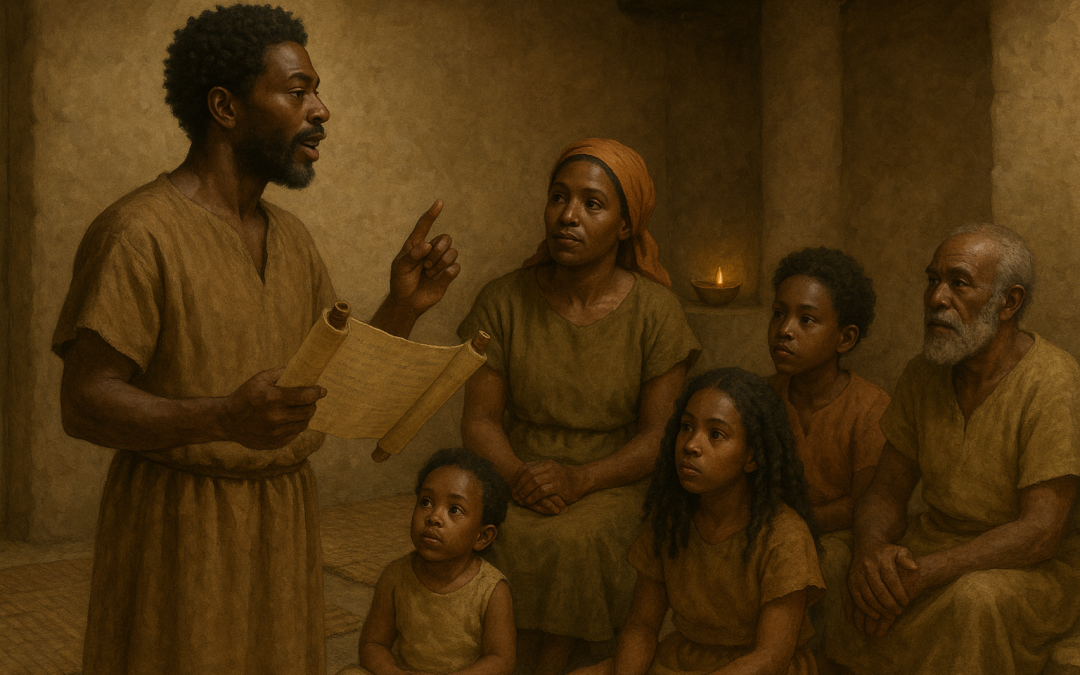
Introduction: Why the Household Must Teach Prophetic Discernment
Yahuah (Yah) speaks by prophecy and He also commands His household to test what is proclaimed. The Yahudiym Sefer (Book) of Law records explicit commands to test a prophet and a promise that a prophet like Moshe (Moses) would arise (see Deuteronomy 13:1-5; 18:15-22). The account of Shmuel (Samuel) hearing Yahuah in youth (1 Samuel 3:1-10) shows a model of reverent attention and orderly instruction. Amos (Amos 3:7) teaches that El Elohiym (the Creator, above all mighty ones) reveals counsel to His servants the prophets. Fathers, mothers, and household leaders must therefore train the next generation—sons and daughters—to recognize true prophetic words, reject falsehood, and bring doubtful matters to proper elders (zaken) and assembly counsel.
Torah Command and Household Application
Torah Command: Deuteronomy 13:1-5 warns that a sign or wonder that leads the people away from Yahuah’s Instruction is to be rejected; Deuteronomy 18:15-22 gives criteria to test a prophet and affirms that a true prophet’s words agree with the Torah (Law or Instruction). These are the yardsticks for the household.
Ministry Teaching/Application: The father is primarily responsible to teach sons and daughters to weigh any prophetic claim against Torah (Law or Instruction). The mother supports instruction at home, models reverence, and teaches younger ones. When a household cannot resolve a question, the matter goes to the zaken (elder) or the assembly for judgment.
Core Truths to Teach Sons and Daughters (age‑appropriate)
- Yahuah speaks, but He does not contradict His Instruction. Teach youth that any prophetic word must agree with Torah (Law or Instruction). If a word contradicts Torah, reject it (Deuteronomy 18).
- True prophecy bears fruit in obedience to Yahuah. A true prophetic call leads to covenant obedience, not lawlessness (Deuteronomy 13).
- Humble hearing and reverent silence matter. Use Shmuel’s example: he listened and answered when instructed, but he did not invent or amplify what he heard (1 Samuel 3).
- Prophecy may require assembly oversight. Teach sons and daughters to bring remarkable or commanding prophetic words to the father, then to zaken (elders) or the assembly for testing (Deuteronomy 13–18).
Simple Household Checklist for Testing a Prophetic Claim
- Listen carefully. Record the exact words and any signs plainly; do not embellish.
- Compare with Torah (Law or Instruction). Does the claim contradict any command in the Yahudiym Sefer (Book) of Law? If yes, reject.
- Check moral fruit. Does the word lead to righteous obedience to Yahuah or to rebellion and sin?
- Consult witnesses. Did others hear the same thing? Are there two or three witnesses where required?
- Time and testing. Do not act hastily on sensational claims. Allow time for signs to appear if the claim is predictive, and watch for consistency with Torah.
- Bring unresolved claims to the father and then to the zaken (elder). Do not settle weighty prophetic commands solely within a single household if they affect the assembly.
Age‑Appropriate Lessons and Exercises
Divide instruction into three stages: little ones (babe(s) and suckling(s)), youth, and adolescent sons and daughters.
- For little ones: Teach that Yahuah speaks through Torah and through good men who follow Torah. Use simple stories: Moshe listened to Yahuah; Shmuel listened and answered. Emphasize obedience to father and mother and to Torah (Law or Instruction).
- For youth: Practice the checklist with short examples. Ask: “Does this agree with Torah?” Teach them to write down prophetic words and bring them to the father.
- For adolescent sons and daughters: Teach the Deuteronomy tests in plain language. Practice disputation exercises and require them to cite the Instruction (Torah) that supports acceptance or rejection.
Role‑Play Scenarios for Household Practice
Use brief role-plays during regular instruction times. Keep the father as the primary teacher when mixed groups are present.
- Scenario 1 — The Promising Sign: A young man claims a sign that a particular youth will lead the assembly. Role-play testing the claim: record wording, check Torah for contradiction, consult two or three witnesses, then present to the zaken.
- Scenario 2 — A Comforting Word: A daughter says she heard a comforting prophetic phrase. Practice discerning whether the phrase encourages obedience to Torah or promotes complacency toward sin.
- Scenario 3 — The Urgent Directive: A visitor claims Yahuah told him to break a Torah command in order to “save” someone. Role-play rejecting the claim and explaining Deuteronomy 13 principles to older youth.
Cultivating Reverence for Yahuah without Fear of Falsehood
Teach sons and daughters to revere Yahuah (Yah) and to honor prophets who speak truth. Reverence means listening attentively and obeying Torah. Teach them that Yahuah’s truth will not contradict the Instruction and that false prophets will mislead (Deuteronomy 13). Encourage honest questions and careful testing rather than blind acceptance or fearful silence.
When to Involve Zaken (Elders) and Assembly Counsel
- Significant public claims. If a prophetic word affects the assembly, bring it to the zaken (elder) or assembly council immediately.
- Disagreement within the household. If the father and mother disagree on authenticity, the matter goes before the zaken for adjudication.
- Claims that require communal action. Do not carry out commands that change assembly practice without the counsel of zaken and the assembly.
Closing Example and Encouragement
Shmuel’s hearing (1 Samuel 3) shows how a young one listens, answers, and then receives teaching from an elder man (Eli). That pattern—reverent listening, careful testing against Torah, and referral to elder counsel when needed—should shape every household. Train sons and daughters to value Torah (Law or Instruction) above sensation, to bring words into the open, and to depend on zaken and assembly oversight when prophecy affects the community.
May the household follow El Elohiym faithfully: teach sons and daughters the Instruction, test every prophetic word, and honor the office of zaken so that the assembly walks in truth and obedience to Yahuah (Yah). For clarity concerning the life and work of the Prophet Yahuah raised among us, see also Yahshua (Jesus) who testified to the authority of the Torah and of the prophets.