
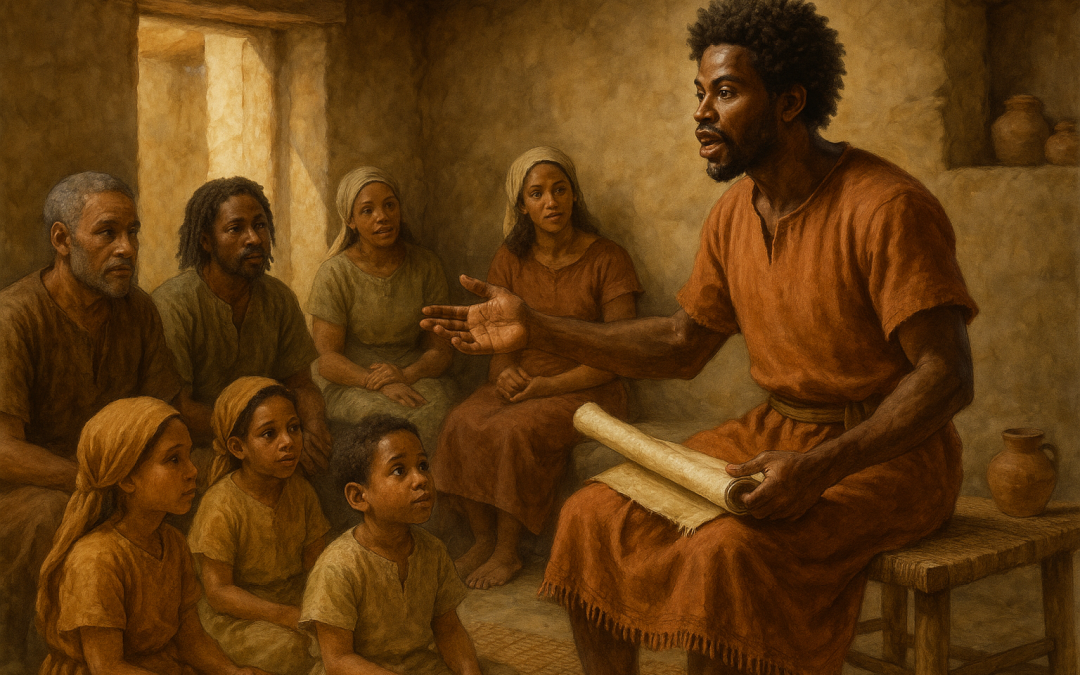
Introduction: Covenant Teaching as Household Duty
The Yahudiym Sefer (Book) of Law commands the household to teach the next generation. Deuteronomy 6:4-9 and 11:18-21 place Scripture at the center of daily life: words bound to the heart, spoken at home and on the way. Psalm 78:5-7 and Proverbs 22:6 remind us that the purpose of telling our people’s stories is to form obedience, trust, and reverent conduct toward El Elohiym (the Creator above all mighty ones). This article gives Torah-centered, practical routines and examples for turning Torah narratives into covenant lessons in your household.
Foundational Practices from the Torah
- Daily recitation: Shema (Hear) — Use the Shema (Deuteronomy 6:4-9) as a morning and evening anchor. Short, regular recitation trains memory and centers the home on the truth that Yahuah (Yah) is One.
- Bind the words — Deuteronomy instructs us to teach children as we walk, sit, lie down, and rise. Turn simple moments (walking to the market, bedtime, meals) into teaching moments.
- Shabbat (Sabbath) storytelling — Reserve a portion of Shabbat for narrative teaching. Sabbath provides an unhurried setting to tell and reflect on covenant stories.
- Meal-based zikaron (remembrance) — Use meals to remember promises and acts of Yahuah; link a story to a mitzvah (commandment) practiced at the table.
Step-by-Step Household Routine
- Morning Shema (5 minutes)
Begin the day with a brief Shema recitation and one simple sentence connecting a Scripture truth to the day ahead. Example: “We serve El Elohiym as One; today we will show this by speaking truth.”
- Daily Walk or Task (2–5 minutes)
Tell a 1–2 minute story fragment while walking or doing chores. Keep the moral linked to a daily behavior (honor parents, speak kindly, share). This fulfills Deuteronomy’s charge to teach on the way.
- Shabbat Story Time (15–30 minutes)
Select one longer narrative each Shabbat. Read or tell the story, then ask age-appropriate questions and close with a short household pledge to practice one mitzvah that week.
- Meal Zikaron (5–10 minutes)
At a weekly meal, recall a covenant promise or miracle and name a practical way the household can live it out. Let children offer actions they will try.
- Bedtime Reflection (2–5 minutes)
Pray a blessing and ask one simple question about the day’s conduct. This reinforces repentance (teshuvah), gratitude, and reliance on Yahshua/Jesus as Savior where appropriate to the household’s confession.
Example Stories and Linked Mitzvot
Below are three example narratives with the mitzvot they illustrate and brief sample discussion prompts.
1) Abraham (Avraham) — Obedience and Trust
Lesson: Abraham’s faith and obedience demonstrate trusting Yahuah’s promises even when the path is hard. Link: the mitzvah of walking in Yahuah’s ways and trusting His covenant.
- Story focus: faithful response to Yahuah’s call, hospitality to strangers, covenant trust.
- Practice: household hospitality or helping a neighbor this week.
- Questions: For small children: “How can we be kind to visitors?” For older children: “When is it hard to obey? How can trust help?”
2) Joseph (Yosef) — Integrity, Forgiveness, and Stewardship
Lesson: Joseph’s life teaches resisting envy, handling injustice with godly character, and stewarding resources for the community’s good.
- Story focus: resisting temptation, working faithfully, forgiving brothers.
- Practice: assign a small stewardship task (help with food storage, care for younger sibling) and speak about fairness.
- Questions: “How do we act when treated unfairly?” “How can we help keep the household’s things safe?”
3) Miriam — Courage, Worship, and Community Care
Lesson: Miriam’s protective action for the infant in the river and her role in worship show care for family and the use of song to glorify El Elohiym.
- Story focus: courage to protect, praise after deliverance, communal roles.
- Practice: teach a simple praise song or give children a task to check on younger members’ needs.
- Questions: “How do we care for those who cannot help themselves?” “What can we sing to thank Yahuah today?”
Age-Appropriate Questions and Prompts
Use simple, open-ended questions that invite reflection and application. Examples:
- Toddlers: “What did Abraham do? Can you show me how to be kind?”
- Early readers (6–10): “Why was Joseph faithful when no one was watching? Name one way you can be faithful today.”
- Teens: “How would you respond if a friend pressured you to sin? What does honoring parents (Exodus 20:12) look like for you now?”
Rituals That Reinforce Memory and Repentance
Rituals should be simple, tactile, and regular. Examples:
- Doorpost note: Place a short, age-appropriate verse or reminder on a doorpost to fulfill Deuteronomy’s instruction to write words on the doorposts as a daily sign.
- Shabbat pledge: On Friday night, each member names one way they will honor the Sabbath and one area for repentance (teshuvah) during the week.
- Meal blessing and action: Light a candle or lift hands before a meal, name one covenant story remembered that week, and commit to one concrete action.
Grounding in Scripture and Wisdom
These practices are rooted in the commands and wisdom literature: the Shema and Deuteronomy’s teaching mandate (Deuteronomy 6:4-9; 11:18-21), the role of instruction in forming character (Proverbs 22:6), Psalm 78’s charge to set hope in El Elohiym and proclaim His works to the next generation (Psalm 78:5-7), and the call to honor parents as a covenant duty (Exodus 20:12). Use Scripture to explain, then use story to apply.
Practical Final Notes for Parents and Household Leaders
1) Keep stories true to Scripture; do not embellish for shock value. 2) Be consistent rather than elaborate—regular short practices form memory. 3) Model repentance and obedience yourself; children learn chiefly by watching. 4) Include Yahshua/Jesus side-by-side where doctrinally appropriate in your household teaching as the fulfillment of covenant hope, while always centering the teachings of the Torah where the story is taken.
Conclusion
Teaching covenant through family storytelling is a faithful way to pass Torah truth from one generation to the next. By using daily Shema recitation, Shabbat storytelling, meal-based zikaron, simple rituals, and age-appropriate questions, households can form children in obedience, repentance, and righteous conduct. Let every household follow the ancient charge: bind these words upon your heart, teach them to your children, and speak of them in every place of life.