
Introduction
The command to attach tzitzit (צִיצִית, “fringes” or “tassels”) to the corners of garments is a clear, family-accessible instruction in the Yahudiym Sefer (Book) of Law. The Torah gives this mitzvah (command) so that Israel will remember covenant duty and obey El Elohiym (the Creator).This teaching looks at the Hebrew meaning of the word tzitzit, the scriptural purpose found in Numbers and Deuteronomy, and concrete, household practices for making, wearing, and teaching tzitzit to children in ways that honor Scripture and support daily covenant life.
Hebrew Word Study: tzitzit (צִיצִית)
The Hebrew word tzitzit (צִיצִית) refers to the fringes or tassels attached to the corners of a garment. The root צִיץ often suggests a small projection, a blossom, or something that stands out visibly. In Scripture the tzitzit are meant to be seen—as a visible sign on ordinary clothing. Because the tzitzit are anchored to the garment’s corners, they speak to the whole garment and its wearer: the reminder is public, practical, and woven into daily life.
The Biblical Purpose: Visible Reminder to Keep the Commandments
Two passages in the Yahudiym Sefer make the purpose plain. Numbers 15:37–41 instructs Israel to attach tzitzit to the corners of their garments and to include a thread of blue. The passage explains the reason: the tzitzit will be something you see so that you remember all the commandments of Yahuah and walk in His ways, thereby becoming holy to El Elohiym. Deuteronomy 22:12 likewise commands that a tassel (tzitzit) be made on the four corners of the garment.
Paraphrase (Numbers 15:37 61): Make tassels on the corners of your garments, and put a cord of blue on each tassel, so you may look at them and remember all the commandments of Yahuah and be holy to El Elohiym.
These commands are practical and covenantal: the tzitzit are not magical objects but intentional reminders. They operate in the same spirit as Deuteronomy 6:4 69 (the Shema and the charge to teach the words to your children), which instructs Israel to keep the words always before them, binding them on the hand and between the eyes and writing them on the doorposts. Tzitzit are one of the Torah’s concrete means to keep the commandments visible and to cultivate remembrance, teaching, and obedience in daily life.
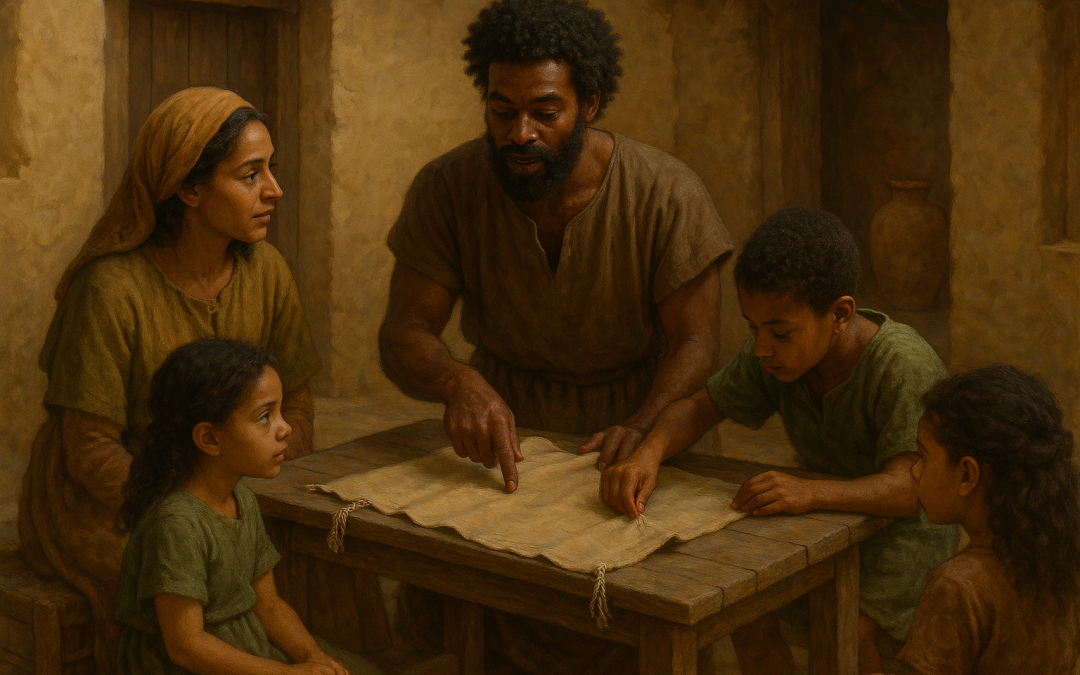
How to Teach and Practice Tzitzit in the Home
When introducing tzitzit at home, the goal is to root the practice in Scripture, not to invent new rituals. Below are household-centered, age-appropriate practices drawn from the commands in Numbers 15:37 61, Deuteronomy 22:12, and Deuteronomy 6:4 69.
1. Make it Scripture-centered
- Read the passages together: Regularly read and discuss Numbers 15:37 61, Deuteronomy 22:12, and Deuteronomy 6:4 69 from the Yahudiym Sefer (Book) of Law with your children. Emphasize the stated purpose: to remember and keep the commandments and be holy to El Elohiym.
- Explain the meaning: Teach the simple Hebrew word study: tzitzit (צִיצִית) means visible fringes that cause us to remember.
2. Making and attaching tzitzit: simple, scriptural, and safe
The Torah commands tzitzit on the corners of a garment (four corners). For household practice, families can use a modest outer garment with visible corners (a simple over-garment or a small rectangular cloth) and attach fringes to each corner.
- Materials: Plain natural-fiber cord or thread in earth tones. Numbers 15 indicates a cord of blue may be included; families may teach about the mention of blue while avoiding extra-biblical formulas.
- Attachment: Securely tie the fringes to the garment corners so they are visible along the lower border. Keep the design restrained and modest; do not exaggerate fringes or place them on sleeves.
- Safety: For young children, ensure fringes are short enough to avoid hazards. Use household discretion about when children wear tzitzit unsupervised.
3. Age-appropriate instruction
- Toddlers: Simple explanation: “These little fringes help us remember to love and obey Yahuah.” Use a story or song to connect the idea to daily choices.
- Young children (5 10): Read the verses together and point to the tzitzit. Encourage them to say, in their own words, what the fringes are for: remembering the commandments and doing what is right.
- Older children and teens: Teach the biblical texts more deeply, show how tzitzit connect to Deuteronomy 6’s command to teach the words to the next generation, and include them in the practical work of making and attaching the fringes when appropriate.
4. Link tzitzit to daily routines and Shabbat (Sabbath)
- Morning routine: Make tzitzit part of the morning dress and prayer time. When putting on the garment, pause to remember the Creator’s commands and to set the day’s intention to walk in His ways.
- Teaching moments: Use ordinary moments walking to school, preparing food, or finishing chores to ask, “Did the tzitzit remind you to choose what is right today?” Keep questions gentle and formative.
- Shabbat: Reserve a fuller or special outer garment with tzitzit for Shabbat and appointed times if your family wishes. Teach Shabbat as a day to celebrate covenant and to reflect on the commandments remembered by the tzitzit.
5. Emphasize repentance, obedience, and covenant life
The tzitzit are not a talisman; they point us back to Yah’s commands. Teach children that when the tzitzit remind them of sin, the right response is repentance and renewed obedience. Tie the visual reminder to prayers for help to obey El Elohiym and to the hope we have in Yahshua (Jesus) for restoration and forgiveness, always keeping the primary focus on Torah obedience and covenant fidelity.
Conclusion
Tzitzit (צִיצִית) are a simple, powerful Torah practice: visible fringes that call Israel to remember the commandments, to walk in the ways of El Elohiym, and to teach the next generation (Numbers 15:37 61; Deuteronomy 22:12; Deuteronomy 6:4 69). In the household, tzitzit can be a daily, humble aid for forming children in covenant remembrance and obedience. Keep your teaching Scripture-centered, age-appropriate, and practical. Use tzitzit to point every member of the family back to Yahuah’s instruction and to the life of repentance and obedience the Torah calls us to follow.