
Introduction
Shabbat (Sabbath) is not merely a day on the calendar but a covenant practice given by El Elohiym (the Creator) to form families, teach children, and shape leaders. This guide, rooted in the Yahudiym Sefer (Book) of Law and the instruction of Yahuah (Yah), lays out practical, age‑graded rhythms and measurable steps parents and community leaders can use to raise covenant stewards at home. Where helpful we place Hebrew words with their English meaning on first use: Torah (Law or Instruction), Ruach Ha’Qodesh (Holy Spirit), Shabbat (Sabbath). We also include the name Yahshua (Jesus) beside familiar English usage when discussing example or model.
Biblical Foundation: Short Teaching Texts for Children
Teach these short paraphrases from the supplied passages each week as simple memory points and discussion starters. Do not present these as verbatim quotations; instead present the teaching essence and reference so children learn source and meaning.
Deuteronomy 6:6‑7 – Teach the commands to your children when you sit, walk, lie down and rise. (Use this as an instruction for daily parent‑child Torah conversations.)
Exodus 20:8‑11 – Remember the seventh day and keep it holy: a weekly gift of rest because El Elohiym rested after creation. (Use this as the central Shabbat command.)
Leviticus 23:3 – The seventh day is a holy convocation; a time for sacred assembly and rest. (Use this to teach communal worship and family gathering.)
Genesis 2:2‑3 – El Elohiym finished His work and blessed the seventh day and made it holy. (Use as the creation foundation of Shabbat.)
Proverbs 22:6 – Train a child in the way he should go; when he is old he will not depart from it. (Use to encourage consistent, age‑appropriate responsibilities.)
Exodus 16:23‑30 – Instructions about gathering manna show that the seventh day is different: do not go out to gather. (Use as an example of obedience and trust in daily provision.)
Weekly Rhythm and Age‑Graded Curriculum
Design a repeating weekly pattern that grows in responsibility. Each Shabbat cycle includes: teaching (short text), practice (service or leadership), symbol (object child handles), and reflection (family conversation).
Infants – 0–2 years
- Teaching: Simple wording from Genesis 2: “God rested.” Repeat the word Shabbat (Sabbath).
- Practice: Gentle holding of a small cloth or soft candle‑shaped toy (symbol of rest).
- Role: Parent models child‑friendly blessing and songs.
Toddlers – 2–4 years
- Teaching: Short line from Deuteronomy 6: “Talk about Torah.”
- Practice: Hand a child the Torah‑covering cloth or small loaf for a blessing; let them say a single word (e.g., “Shalom” or “Shabbat”).
- Measurement: Child leads a one‑word response for 4 of 4 weekly Shabbat gatherings per month.
Early Childhood – 5–7 years
- Teaching: Paraphrase Exodus 20:8‑11 in two lines: “God made this day holy; we rest and worship.”
- Practice: Lead one short household liturgy element (lighting, blessing over bread, or Psalm line).
- Measurement: Child leads role independently in 2 of 4 weekly Shabbats and repeats the short text from memory.
Middle Childhood – 8–12 years
- Teaching: Short study from Exodus 16 and Leviticus 23 about Sabbath provision and holy convocation.
- Practice: Teach children to prepare one part of the meal, set the space, and lead a 3–5 minute teaching of the chosen text.
- Measurement: Child prepares and leads 1 Shabbat a month; keeps a simple journal entry reflecting on rest, service, and obedience.
Teens – 13+ years
- Teaching: Deeper discussion of covenant responsibility (Deut. 6) and leadership principles (Prov. 22).
- Practice: Rotate leadership for family worship, mentor younger children, plan and lead a community Shabbat table once per quarter.
- Measurement: Documented mentoring sessions (minimum 3 per quarter); lead a community element with elder oversight.
Simple Household Liturgy and Symbols Children Can Lead
Keep language brief, repeatable, and Torah‑centered. Encourage children to hold or carry a symbol while leading.
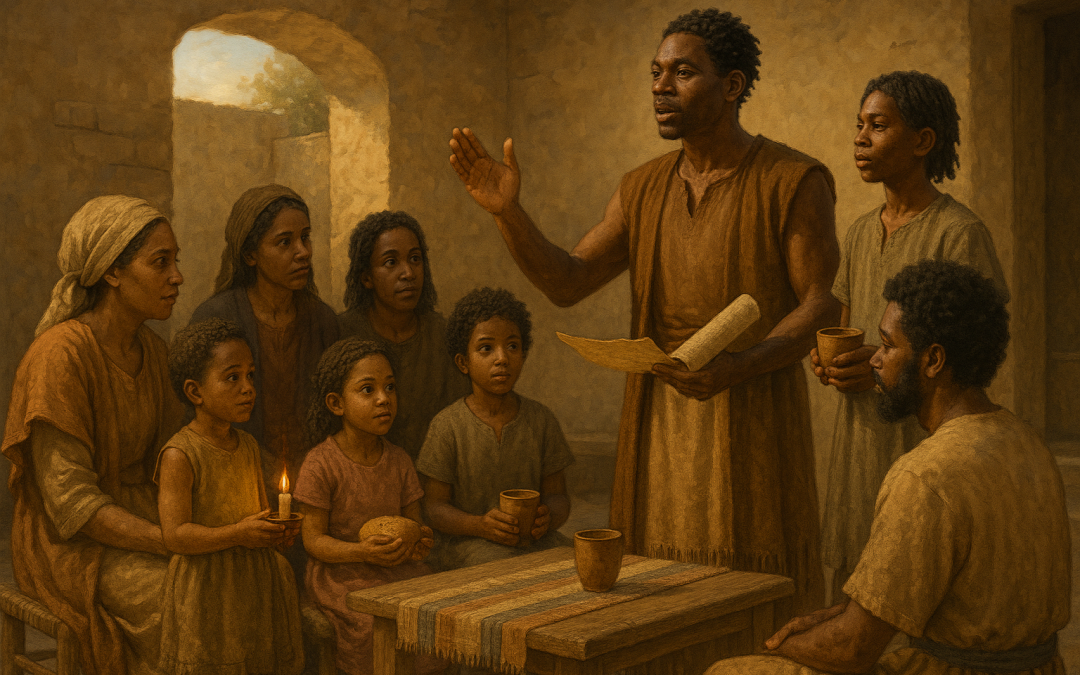
- Candle/Light (Symbol of rest) – Short blessing parents say while child holds a small safe light or cloth: “We begin Shabbat to rest and remember El Elohiym’s work.” Child responds, “Amen.”
- Bread (Symbol of provision) – Use a small loaf or challah‑style roll: one or two short lines thanking Yahuah for daily bread and Sabbath provision (reference Exodus 16).
- Cup (Symbol of covenant) – Pour a small cup (grape juice or water); child says, “We remember the covenant and rest in Yahuah’s care.” Family answers, “Amen.”
- Psalm or Shema (Hear) – A single verse or line from a Psalm or the Shema, led by the child, then repeated by the family (see Deut. 6:6‑7 instruction to speak at all times).
Mentoring Steps for Cultivating Covenant Responsibility
- Model consistently – Parents and elders must keep predictable rhythms so children learn by watching (Deut. 6:6‑7).
- Assign attainable tasks – Start with single actions (lighting, holding the bread) then add teaching responsibilities.
- Provide clear feedback – Praise obedience and correct gently, linking behavior to covenant terms (obedience, trust, rest).
- Use peer mentoring – Older children mentor younger ones under adult supervision; this instills leadership and service (Prov. 22:6 application).
- Rotate leadership – A schedule ensures every child leads something; document leadership on a family board.
Measurable Practices for Spiritual Formation and Family Unity
Establish simple metrics to measure growth and sustain accountability:
- Weekly checklist: child led element (Y/N), task completed (Y/N), short memory line recited (Y/N).
- Monthly review: family sits together after Shabbat to share one thing learned, one service done, and one way to grow. Record answers in a family journal.
- Quarterly milestones: child leads a full Shabbat table segment; older child mentors younger one; community sharing event led with elder oversight.
- Annual covenant pledge: family records a brief covenant commitment to keep Shabbat as taught in Yahudiym Sefer passages and signs it together.
Final Encouragement
Raising Shabbat stewards is a long obedience of small acts. Keep teachings short, rooted in Torah (Instruction), and repeated in love. Train children with patience and measurable practices so the rest, worship, and service of Shabbat shapes hearts for a lifetime. Seek guidance from elders and include Yahshua (Jesus) in teaching only as a model of humble service and obedience when appropriate in your community context. May Yahuah bless your household as you honor the weekly gift of Shabbat and raise faithful stewards under the authority of El Elohiym.