
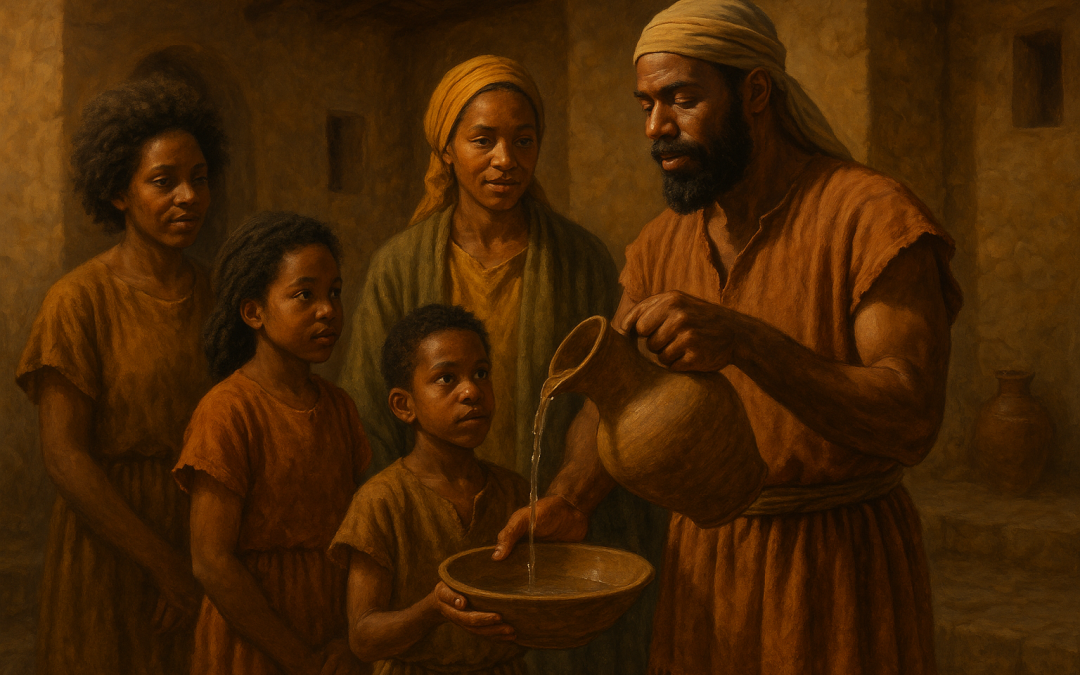
Introduction: Covenant Cleanliness in the Home
The Torah (Law or Instruction) sets a pattern of outward washing in service of inward purity. The kiyor (laver) and the washing of priests teach us that approach to Yahuah (Yah) requires readiness of body and heart. In the Yahudiym Sefer (Book) of Law we find the kiyor placed for priests to wash before offering service, and laws of cleansing that remind us the community of Israel is to live in covenant distinction. This article traces those biblical roots and offers simple, Torah-grounded ways households can adopt netilat yadayim (literally, lifting or taking of hands; hand-washing) before family worship, meals, and Shabbat (Sabbath).
Torah Basis: Kiyor, Priestly Washing, and Rites of Cleansing
Exodus 30:17-21 records El Elohiym commanding a laver for the Tent of Meeting so Aaron and his sons would wash their hands and feet before ministering. The laver functioned as both a practical basin and a sanctifying boundary: the priests approached the holy in appointed condition. Leviticus 8:6 describes Moses washing Aaron and his sons with water at their consecration, a striking public act of setting them apart for service.
Numbers 19:11-22 contains the laws of purification regarding contact with death and the use of the waters of cleansing. These rites show the Torah distinguishes between ordinary uncleanness and covenantal participation. The goal is not mere formality but restoration so Israel may re-enter the presence of Yahuah and communal worship.
Scriptural Principle: Clean Hands and a Pure Heart
Psalm 24:3-4 asks who may ascend the hill of Yahuah and answers: the one with clean hands and a pure heart. This pairs outward action and inward reality. The priestly washings modeled the outward moment; the Psalm points us to the inner character that must accompany any ritual act.
Historical Context, Briefly
In the ancient Tabernacle and later the Temple, Israelite priests performed set washings before sacrifice and service. That practice identified them as those who must be ritually fit for direct contact with the holy. Over centuries Jewish practice preserved forms of handwashing as expressions of holiness before prayer, eating, and ritual acts. We draw from that heritage while remaining rooted in the Torah narratives and the teaching of Yahuah.
Households and Covenant Readiness: Why Adopt Netilat Yadayim at Home?
- Remember the standard. The kiyor reminds families that worship before Yahuah is approached with intentionality.
- Teach children covenant practice. A simple washing ritual forms habits of reverence and offers a natural moment to speak of sanctification, repentance, and thanks.
- Connect body and heart. Psalm 24 teaches that outward washing without inward cleansing is incomplete; the practice becomes a prompt for confession and kindness.
Simple, Torah-Grounded Household Practices
The goal is not to invent a new law but to bring a Torah pattern into family life in accessible form. Below are modest, reverent practices adaptable to most homes.
Essential items
- A clean bowl or pitcher and a small basin for drainage
- A dedicated towel or cloth
- A central place near the table or prayer space
Basic procedure for netilat yadayim (hand-washing)
- Place the vessel before worship or the meal. The father, head, or appointed elder may lead, modeling the practice for the household.
- Before washing, invite a short moment of silence and, if appropriate, a brief confession or petition to prepare the heart.
- Pour water over the right hand, then the left, ensuring fingers and palms are washed. This may be done once or three times, according to family custom, avoiding formulaic repetition; the point is intention, not superstition.
- Dry the hands and proceed to prayer, meal blessing, or Shabbat worship.
When to use this practice
- Before family morning or evening worship
- Before communal meals and when welcoming Shabbat
- After contact with death or situations that Scripture marks as requiring purification, following Numbers 19 teachings
Sample Scriptural Blessings and Phrases
These short blessings are drawn from Torah language and Psalms and may be used as family prayers or prompts. Present them reverently and explain their meaning to children.
- Hebrew transliteration: Baruch atah Yahuah, taher yadayenu v’kadesh libeinu. English: Blessed are You, Yahuah; cleanse our hands and set our hearts apart. (Used as a short prayer before washing.)
- Hebrew transliteration: Yahuah, help us ascend Your hill with clean hands and a pure heart. English: Yahuah, prepare us to meet You with clean hands and a pure heart. (A Psalm 24–based petition.)
Pastoral Cautions: Avoiding Ritualism
We must guard against turning a blessed practice into a mechanical superstition. The Torah washings were means to an end: covenant service and godly character. Fathers and household leaders must teach that netilat yadayim is a sign of covenant readiness, not a talisman that guarantees favor.
- Emphasize repentance and heart-change, not only the physical act.
- Do not require formulaic repetitions as if they confer holiness by number; quality of devotion matters.
- Avoid elevating household practice above the clear commands of the Yahudiym Sefer of Law or the teachings of Yahshua (Jesus) when shared in instruction; this is a devotional practice that deepens Torah obedience, not an additional law.
Concluding Exhortation
The kiyor, the washing of Aaron and his sons, and the rites of purification remind Israel that worship is entered with care for both hands and heart. Psalm 24 summons us to examine the inward life even as we observe outward signs. A simple, reverent netilat yadayim in the home can form a useful discipline: a short, visible act that prompts confession, thankfulness, and readiness to meet Yahuah in family worship, at the table, and on Shabbat. May El Elohiym strengthen households to teach these things respectfully, with humility and truth.
Scripture references used
- Exodus 30:17-21 (kiyor/laver and priestly washing)
- Leviticus 8:6 (washing of Aaron and his sons at consecration)
- Numbers 19:11-22 (laws of purification)
- Psalm 24:3-4 (clean hands and a pure heart)