
Introduction
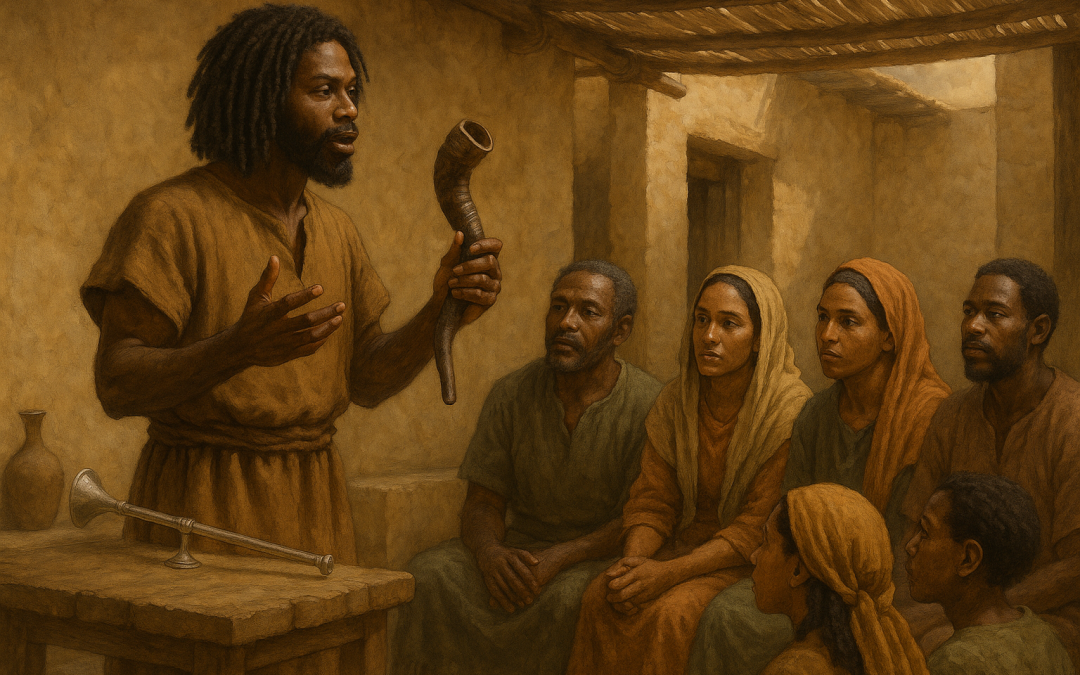
Yom Teruah (Day of Trumpets) calls Yahudiym (Israel) to hear the sound of the shofar (ram’s horn) and to gather for a holy convocation. This teaching draws from the Yahudiym Sefer (Book) of Law and the Psalms and Prophets to explain biblical commands for the shofar and the chatzotzerot (silver trumpets), to unpack themes of calling, repentance, and assembly, and to give practical, family-centered ways to observe and teach the children. Throughout we honor Yahuah (Yah) as El Elohiym, and we mention Yahshua/Jesus where it helps connect Messianic fulfillment to Torah practice.
Biblical Commands and Signals (Scripture Overview)
The Torah establishes Yom Teruah and its signs. Leviticus 23:23-25 instructs the community concerning the seventh month’s first day as a day of blowing the trumpet and a holy convocation with no ordinary work. Numbers 29:1-6 gives the burnt offerings and worship order for that day. Numbers 10:1-10 describes the making and use of silver trumpets (chatzotzerot) to direct the community — for calling the assembly, moving the camp, and sounding war and celebration. The call to “blow the trumpet” in worship is echoed in the Psalms (see Psalm 81:3), and the prophet Joel exhorts the people to sound the alarm in Zion (see Joel 2:1). Leviticus 25:9 ties the great trumpet blast to the Yovel (Jubilee), announcing liberty and restoration when the fiftieth year is proclaimed.
Distinguishing instruments and purpose
- Shofar (ram’s horn) — a natural horn used in sacred convocations, a symbol of calling, repentance, and proclamation on Yom Teruah (see Leviticus 23:23-25; Psalm 81:3).
- Chatzotzerot (silver trumpets) — metal trumpets fashioned by priestly command for directing camp movement, summoning assembly, and signaling (Numbers 10:1-10). These functioned as civic and cultic signals.
Themes: Calling, Repentance, and Holy Assembly
Three themes thread through the appointed day:
- Calling: The blasts call families and community into hearing and action. The shofar summons the heart to attention; the silver trumpets order the camp for movement or assembly (Numbers 10).
- Repentance: The sound warns and exhorts the people to return to covenant faithfulness. The prophetic summons in Joel 2:1 links the alarm-blast to repentance and national turning.
- Assembly and Restoration: Yom Teruah is a holy convocation (Leviticus 23:24). In the Jubilee year the trumpet announces liberty and restoration (Leviticus 25:9), reminding households and the community of God’s justice and mercy.
Shofar Sounds: Biblical signals and traditional calls
The Torah emphasizes the act of blowing; later practice gives names to distinct calls used during assemblies. Common traditional calls (with transliteration and meaning) used in many Israelite communities are:
- Tekiah — a long, straight blast (an assembled call to attention).
- Shevarim — three medium broken blasts (a sound of brokenness or mourning).
- Teruah — a staccato alarm of small rapid blasts (an alarm to awaken and repent).
While these names come from later tradition, they are consistent with the biblical purpose: to call, to alarm, and to convict the heart (see Leviticus 23:23-25; Psalm 81:3; Joel 2:1). The silver trumpets (Numbers 10) served more administrative signals — to gather heads of families, to move camp, and to sound alarm in war or festival.
Household Preparation — Practical Steps
Prepare your home and family with reverence and order so the appointed day fosters repentance and assembly.
- Study together: Read aloud the Yahudiym Sefer passages cited above (Leviticus 23:23-25; Numbers 29:1-6; Numbers 10:1-10; Leviticus 25:9) and paraphrase them for children. Emphasize the call to holy convocation and the Jubilee proclamation.
- Clean and set a sacred space: Clear a table for the family assembly, place the Torah (Law or Instruction) open or nearby, and prepare a shofar and, if available, a silver trumpet replica or musical equivalent for teaching.
- Plan a simple order: Lighting (quiet moment), Scripture reading, shofar blowing, confession and repentance, brief teaching, a family declaration, and a shared meal or bread and wine/grape juice if your community observes that sign.
- Invite neighbors: Yom Teruah is both family and community; consider inviting other households for a larger convocation if local practice permits.
Household Liturgy (Sample Order)
Below is a short, reverent liturgy families can adapt. Use Yahudiym Sefer references for teaching and make all words plain and teachable.
- Opening: A brief blessing to Yahuah (Yah) of El Elohiym — “We gather to hear Your call.”
- Scripture reading: Paraphrase Leviticus 23:23-25 and Numbers 10:1-10.
- Shofar/blowing time: Lead one or more blasts — a Tekiah, Shevarim, Teruah sequence — pausing between each to explain its meaning.
- Confession and Repentance: Invite quiet reflection, confession aloud from family members as led by the elder or father.
- Declaration of Jubilee-hearted mercy: Read Leviticus 25:9’s teaching on the Yovel (Jubilee) and pray for restoration in personal and communal life.
- Closing blessing and a shared simple meal.
Teaching Children — Age-Appropriate Methods
- Toddlers (ages 2–4): Let them hold a small shofar replica and listen to one short blast. Use a simple story: “God calls His family to come close.” Keep it brief and tactile.
- Young children (ages 5–9): Teach the names Tekiah, Shevarim, Teruah with simple meanings (attention, broken heart, alarm). Use rhythm games to mimic the sounds and a short role-play of assembling the camp.
- Preteens and teens: Read and discuss Numbers 10 and Leviticus 25:9. Assign them to lead parts of the liturgy, explain the Jubilee principle (Yovel) and brainstorm ways the family can practice restoration (forgiveness, returning borrowed items, generous giving).
From Yom Teruah to Yovel (Jubilee): Community Restoration
Leviticus 25:9 links the trumpet blast to the Yovel (Jubilee), a time of liberty and restoration. Teach your household that Yom Teruah’s summons includes a prophetic and practical reminder to pursue justice: forgive debts where possible, restore relationships, and steward property and labor righteously. This is not merely ceremonial; it shapes covenant life under Yahuah (Yah).
Closing Exhortation
Observe Yom Teruah with reverence, listening for the voice of Yahuah (Yah), and preparing the heart for repentance and restoration. Use the shofar and the memory of the silver trumpets to teach household and community discipline: to gather, to correct, and to proclaim liberty. May your family’s observance draw you closer to El Elohiym and align your household with the Torah (Law or Instruction) that calls us to live righteously. In remembering the Jubilee, work toward mercy and restoration in your community, and point all things to the hope we have in Yahshua/Jesus as the fulfillment of God’s promises.