
Introduction: Why Mark the End of Shabbat (Sabbath)?
Shabbat (Sabbath) is a gift from Yahuah (Yah) and a sign of covenant relationship with El Elohiym (the Creator above all mighty ones). The Yahudiym Sefer (Book) of Law makes clear that rest was established at creation (Genesis 2:2-3), and that Shabbat is set apart—an ongoing reminder of who we are under the Torah (Law or Instruction) and under covenant (Exodus 20:8-11; Exodus 31:12-17; Leviticus 23:3). Ending Shabbat intentionally helps children and adults alike see the difference between the holy and the common, and prepares hearts to carry Shabbat values into the coming week.
Scriptural Foundations (brief paraphrases)
Genesis 2:2-3 — On the seventh day, Yahuah finished His work and rested, blessing and making it holy.
Exodus 20:8-11 & 31:12-17 — Shabbat is commanded as a day of rest, a sign of the covenant between Yahuah and Israel, to be observed throughout generations.
Leviticus 23:3 — The seventh day is a holy convocation; rest is commanded.
Isaiah 58:13-14 — Shabbat is tied to delighting in Yahuah; honoring it brings blessing and identity.
These passages are Scripture; here they are summarized to show the biblical purpose: rest, sanctification, covenant identity, and delight in Yahuah. Our household practices should flow from these purposes rather than inventing requirements beyond the Torah.
Household Principles for Ending Shabbat
- Separation: Teach that Shabbat made ordinary time different—sacred time to be honored and then separated from the workweek.
- Gratitude: Conclude with thanksgiving for rest, revelation, family, and provision.
- Instruction: Use the moment to remind children why we observe Shabbat—obedience and relationship with Yahuah.
- Transition: Include a brief, simple ritual that signals a change from holy to weekday, without adding legal burdens.
Simple, Scripture-Respecting Household Practices
Below are practical, family-oriented actions that keep the focus on Torah purposes. Present these as family customs inspired by Scripture, not additional commandments.
1. Gather as a Family
Before lighting or beginning, call the household together. Let an adult Israelite man lead the teaching for mixed groups, explaining the purpose in simple terms: rest is ended and we are sent to serve Yahuah in the week ahead.
2. A Short Blessing of Thanksgiving
Offer a brief spoken blessing in plain language that children can learn. Example: “We thank Yahuah our El Elohiym for the gift of Shabbat—rest, Torah, and family. Bless our coming week to serve You in all we do, through Yahshua (Jesus).” Keep it short and reverent.
3. Light a Flame to Remember Separation
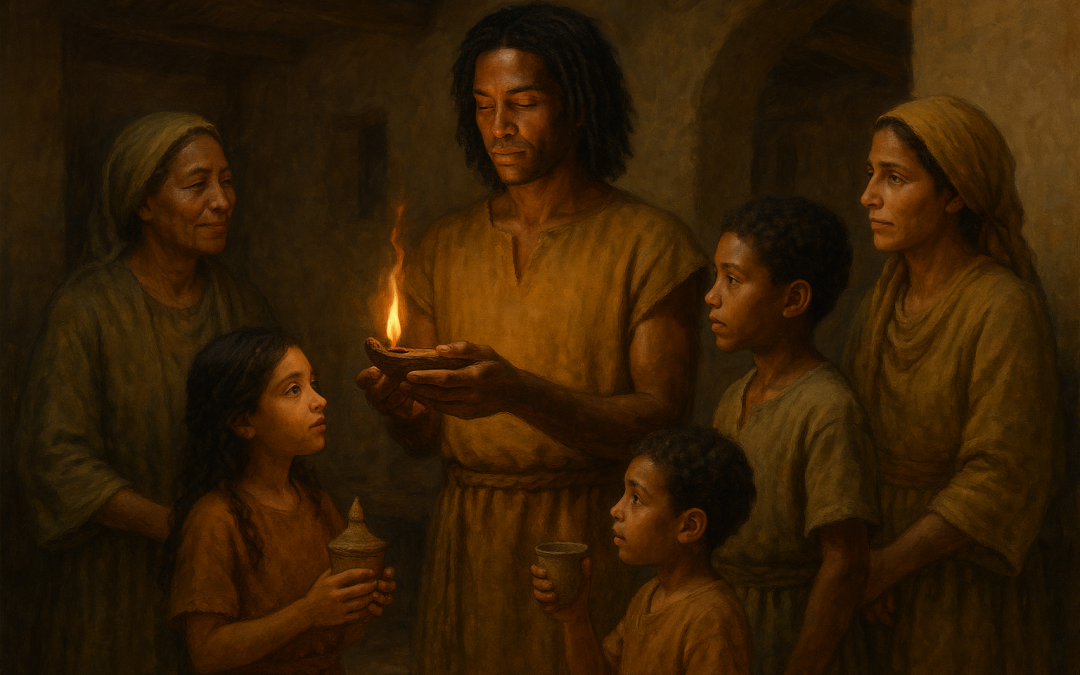
Use a small candle or oil lamp as a symbol of the light and holiness of Shabbat now being set apart. The leader can hold the flame and say: “This flame reminds us that Shabbat was blessed and set apart. As the flame is put away, we carry its light into our work.” For safety, supervise children closely.
4. Cup of Thanks (Simple Kiddush-Style Moment)
Share a small cup of grape juice or wine as a sign of blessing and fellowship. The leader may say a short phrase of thanks for provision and rest. Keep portions tiny for children and emphasize the symbolic nature.
5. Fragrant Reminder
Allow children to smell a small container of pleasant spices or herbs to represent carrying the sweetness of Shabbat into the week. Explain that Isaiah urges delight in the Shabbat, and we carry that delight forward (Isaiah 58:13-14).
6. A Family Vow (One Sentence)
End with a short family promise to honor Shabbat values in the coming week—kindness, honesty, rest where possible, study of Torah, and obedience. Keep it affirmative and achievable.
Teaching Children: Short Scripts and Actions
- Explain briefly: “Shabbat was made by Yahuah at creation. It was blessed and made holy (Genesis 2:2-3). Tonight we remember and say thank you.”
- Assign children small roles: one child holds the spice box; another gently waves the cloth over the flame; a child recounts one thing they learned on Shabbat to share with the family.
- Use questions: “What did you learn this Shabbat about Yahuah? How will you show His love this week?” These reinforce memory and application.
Sample Household Script (2–5 minutes)
- Leader calls family together and briefly explains purpose (30 sec).
- Short blessing of thanks (20–30 sec).
- Light flame as symbol; children hush and watch (30–45 sec).
- Pass small cup for a sip and pass the spice for smelling; each child names one thing they will do this week to honor Yahuah (60–90 sec).
- Close with family vow and put flame safely away (30 sec).
Reflection Prompts for the Week
Use these at the close of the ritual or later in the week to sanctify ordinary time and reinforce covenant identity:
- What did Shabbat teach you about Yahuah this week?
- How will you show obedience to Torah (Law or Instruction) in your school, work, or friendships?
- Who needs rest, mercy, or help this week, and how can our family serve them?
- What one word from our Torah study this Shabbat will you carry into your work this week?
Final Encouragement
Havdalah (separation) as a household practice need not be elaborate to be meaningful. Rooted in the Yahudiym Sefer (Book) of Law and the teachings of Scripture, these simple, repeatable acts teach children the holy purpose of Shabbat, encourage obedience to El Elohiym, and help families carry Shabbat’s light—its rest, Torah, and joy—into the week. Pray aloud together, remember the Creator who blessed the seventh day (Genesis 2:2-3), and let your family walk in covenant identity and obedience through the ordinary days that follow.
Key Terms: Shabbat (Sabbath), Torah (Law or Instruction), Ruach Ha’Qodesh (Holy Spirit), Yahshua (Jesus).