
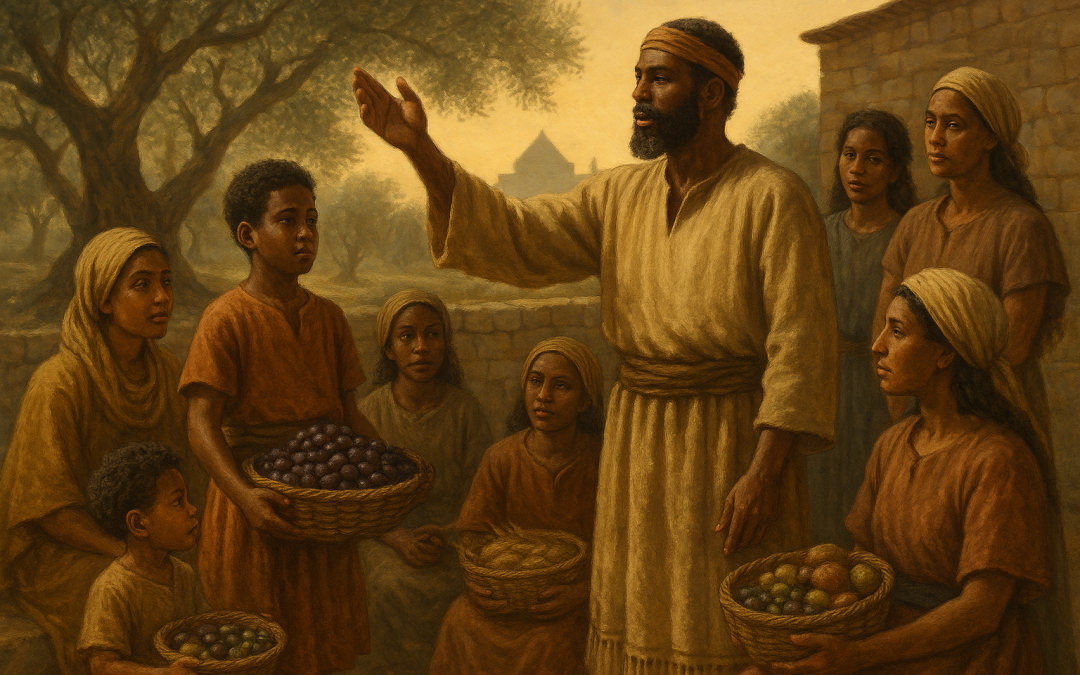
Introduction: Covenant Acts of Trust
The Yahudiym Sefer (Book) of Law gives Israel clear commands about the first of the harvest and the tenth of increase. These practices — bikkurim (firstfruits) and ma’aser (tithes) — are not mere taxes but covenant signs that teach households and communities to trust Yahuah and to remember His provision. Relevant passages include Leviticus 27:30-34; Numbers 18:21-24; Deuteronomy 14:22-29; and Deuteronomy 26:1-11. This teaching explains the commandments, their purpose, and practical, age-appropriate ways ancient Hebrew households could observe them today as a way of nurturing covenant faithfulness.
What Are Bikkurim and Ma’aser?
Bikkurim (firstfruits) — The Torah commands that the first of the ripening produce be consecrated to Yahuah as holy (see Leviticus 27:30-34). The earliest fruits are set apart and brought to the house of Yahuah as an expression of thanks and recognition that the land and its yield come from the Creator, El Elohiym.
Ma’aser (tithes) — The people were to set aside a tenth of their increase. Numbers 18:21-24 explains that the Levites received the tithe as their inheritance in return for serving at the sanctuary. Deuteronomy 14:22-29 outlines the use of tithes for festival celebration and, in the third year, for provision of Levites, strangers, fatherless, and widows.
Purposes of These Commandments
- Trust in Yahuah. Giving firstfruits and tithes trains the household to acknowledge that the land and increase belong to Yahuah, building dependence on His blessing rather than self-reliance.
- Gratitude and remembrance. The ritual of bringing firstfruits is tied to declaring Yahuah’s saving acts on behalf of Israel (see Deuteronomy 26:1-11).
- Community provision. Tithes sustain those who minister (Levites) and provide for the vulnerable in society.
- Covenant identity. These acts mark Israel as a people who live under Torah and who practice justice, mercy, and worship together.
Ritual Forms and Household Practices
The ancient practice involved several concrete steps. A household leader—father or elder—would:
- Identify the first, choice fruits at the beginning of harvest and set them aside as holy (bikkurim).
- Prepare a basket or container with produce and, when possible, bring it to the sanctuary or local assembly with rejoicing.
- Set aside a regular tenth of all produce and income as ma’aser, tracking by simple household record-keeping.
- Distribute tithes appropriately: the Levite’s portion (Numbers 18) and, in the prescribed year, the support for Levites and the poor (Deuteronomy 14).
When the Temple was accessible, firstfruits were brought to the sanctuary with the family and presented before the priest. Where the Temple was not accessible, the household could follow local community norms: bring bikkurim to the nearest congregation or place them in a designated communal storehouse for the Levites and poor, in the spirit of the Torah’s commands.
Practical Household Habits
- Keep a simple harvest calendar and mark the earliest ripening produce as firstfruits.
- Designate a jar, basket, or ledger for tithes; make the setting aside a regular family discipline (weekly or at each harvest).
- Teach children to help gather produce into the firstfruits basket; involve them in counting and packing simple tithing portions so giving becomes concrete and normal.
- Plan household needs first, then set aside what Yahuah requires—this models wise stewardship, not reckless giving that harms the family.
Teaching Children the Declaration of Firstfruits (Deuteronomy 26:1-11)
Deuteronomy 26 prescribes a declaration of remembrance to be spoken when presenting firstfruits. To teach the next generation:
- Begin with the story: teach children that Israel was once oppressed and Yahuah delivered the people. Use simple retelling for young children and fuller recounting for older youth.
- Use action and repetition. Have toddlers carry a small fruit in a basket; preschoolers repeat short phrases of thanksgiving; school-age children learn a paraphrase of the declaration and its meaning.
- Practice the words together as a family. A suitable paraphrase of the Deuteronomy passage might say: “We were once in need; Yahuah brought us out and gave us this land. I bring these firstfruits as thanks and declare our remembrance of His kindness.” Always cite the source to teach them where the words come from (Deuteronomy 26:1-11).
- Make it a family pilgrimage. Walk together to a place of assembly or to a special household table where the father or elder leads the blessing and presentation.
These steps form children’s memory of covenant faith and give them a tactile experience of giving back to Yahuah.
Communal Provision: Levites and the Poor
The Torah sets clear communal structures. Numbers 18:21-24 assigns the Levites’ livelihood to the tithe: they had no land allotment and depended on the people’s obedience. Deuteronomy 14:22-29 ensures that, in the third year, a special tithe is used to feed Levites and provide for strangers, orphans, and widows.
Practically, communities maintained storehouses or appointed trustworthy Levites or elders to receive and distribute these portions. Households were to bring what Yahuah commanded to the assembly, trusting the community to care for those who serve and those in need.
Responsible Household Giving
Obedience to bikkurim and ma’aser should be practiced with wise stewardship:
- Ensure the household’s basic needs are met; the Torah’s commands are given to living families, not to impoverish them.
- Teach children the difference between sacrificial dependence on Yahuah and irresponsible neglect of family duties.
- Keep transparent records within the household and the community so distributions are accountable and faithful.
- Celebrate giving with joy. The Torah links tithes and firstfruits to feasting and gladness — giving should form gratitude, not legalism.
Conclusion: Forming Covenant People
Bikkurim and ma’aser shape Israelite households into communities that remember deliverance, trust Yahuah’s provision, and live out covenant responsibility toward ministers and the vulnerable. By making these practices family rhythms — by teaching children the declaration, involving them in practical tasks, and ensuring communal care for Levites and the poor — households cultivate gratitude, obedience, and righteous conduct under the Torah. In all of this we honor El Elohiym and raise a people taught to depend upon and thank Yahuah for every good gift.
Scripture references used: Leviticus 27:30-34; Numbers 18:21-24; Deuteronomy 14:22-29; Deuteronomy 26:1-11. Passages are paraphrased here for teaching purposes in keeping with Yahudiym Sefer (Book) of Law guidance.