
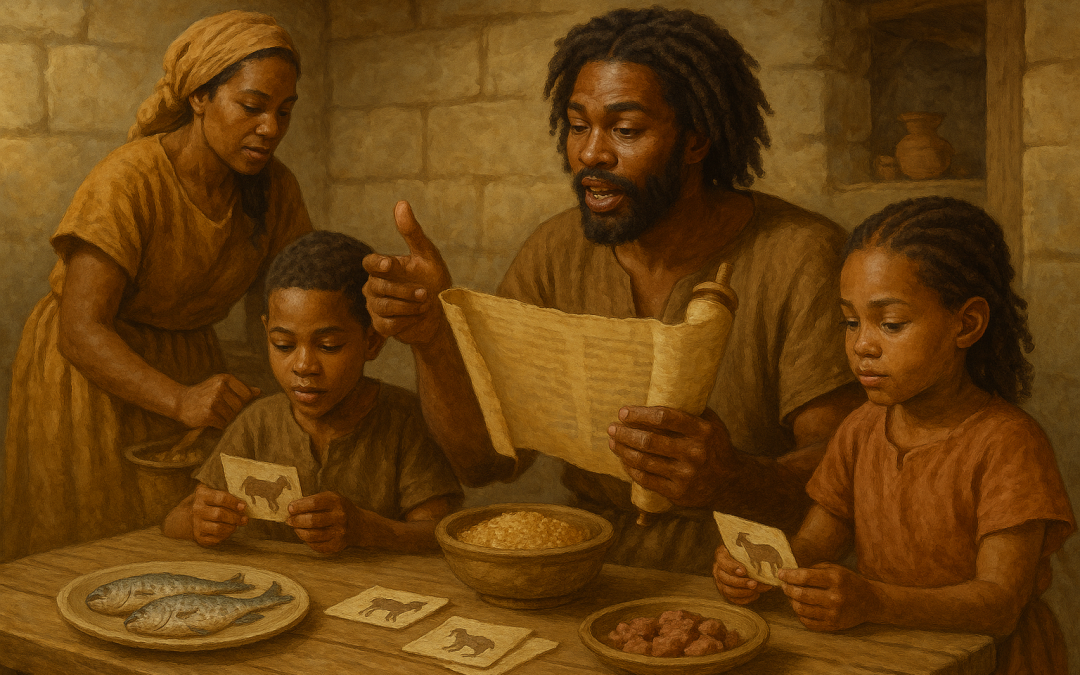
Introduction: Covenant Duty of the Household
The Torah (Law or Instruction) makes dietary commands part of covenant life. The father bears the primary duty to teach the Torah rules about food; the mother bears the daily duty to manage meal preparation and household practice under the father’s teaching. This guide follows the Yahudiym Sefer (Book) of Law passages—Leviticus 11:1–47; Deuteronomy 14:3–21; Leviticus 17:10–14; Genesis 9:3–4—to give the father and mother a clear, practical plan for training sons, for organizing the kitchen, and for keeping mealtimes in covenant obedience to El Elohiym (God).
1. TORAH COMMAND: What the Torah Actually Commands
The Torah gives three clear commands that the household must teach and obey.
- Clean and unclean animals: Leviticus 11 and Deuteronomy 14 give lists and identifying signs for permitted and forbidden animals. A land animal must both have split hooves and chew the cud to be clean. A fish must have fins and scales to be clean. Certain birds and all creeping things are forbidden. The father must teach these identifying signs so sons learn which animals are permitted.
- Do not eat dam (blood): The Torah teaches that the nefesh (life) of the flesh is in the dam (blood), and the LORD Yahuah (the LORD) gave the dam on the altar for atonement. The Torah forbids eating dam; meat with dam remaining is not to be eaten (see Leviticus 17:10–14; Genesis 9:3–4). The household must treat this as a Torah command, not as a later custom.
- Holiness at the table: The dietary commands are given “that you be holy” (see Leviticus 11). Observance of these rules sets the covenant household apart and trains sons in obedience to El Elohiym.
2. How to Identify Clean and Unclean Animals (Practical Tests)
Teach sons the observable tests the Torah gives.
- Land animals: Clean only if the animal both has split hooves and chews the cud. If either sign is missing, the animal is unclean. Use familiar examples as household identifications: a cow is commonly treated as clean; a pig is unclean because it has a split hoof but does not chew the cud. Explain these as common identifications used to teach the Torah signs, not as extra Torah lists.
- Sea creatures: Clean only if the creature has both fins and scales. Shellfish and most other sea creatures are unclean by the Torah tests.
- Birds and creeping things: The Torah lists forbidden birds and forbids creeping things; show sons the forbidden bird names in Leviticus and teach that most flying insects are unclean, with the exceptions noted in Deuteronomy for certain locusts. Do not assert modern species names as Torah lists unless the household uses them as common identifications.
3. The Prohibition on Dam (Blood) — Torah Text and Household Rules
The Torah states the reason and the command plainly: the nefesh (life) of the flesh is in the dam (blood), and Yahuah gave the dam on the altar to make atonement (Leviticus 17:11). From this Torah command the household must adopt simple procedures.
- Slaughter and draining: When the household obtains meat, the father or a responsible Israelite man appointed by the household must supervise slaughter so the meat has no remaining dam. Specific later community methods for removing dam (for example, salting or soaking) are later customary practices; teach them only as household customs if the household uses them, not as Torah commands.
- Avoid blood in cooked food: Do not prepare, serve, or eat meat that appears bloody or that has not been properly drained. Teach sons to inspect meat and to refuse meat with visible dam.
- Spills and table practice: If dam spills at the table, remove and dispose of it according to household instruction and do not eat the affected food. The household should have a clear procedure and the mother should manage the immediate removal under the father’s teaching.
4. Kitchen Organization for Covenant Compliance
Make obedience normal by organizing the household routines.
- Designate roles: The father teaches the Torah rules about food and oversees household compliance; the mother manages daily meal preparation, storage, and table practice under the father’s instruction. A responsible Israelite man may carry out or supervise slaughter and initial meat preparation for the household.
- Separate storage areas: Keep clearly labeled containers and shelves for permitted meats and for produce/grains. If the household follows later customary cleansing methods, keep the tools and vessels used for those methods separate from other cookware, and explain to sons that those techniques are later practice, not as Torah command.
- Cleaning and utensils: Rinse and inspect meat before cooking. Use separate cutting boards and utensils for raw meat and for produce. Clean surfaces thoroughly after any contact with meat to prevent confusion and to teach careful obedience.
- Meal planning: Build menus around permitted land animals (meeting Torah signs), fish with fins and scales, and plant foods. Keep a household list of approved species as a reference for sons learning food preparation.
5. Teaching Sons: Age‑Appropriate Instruction
Train sons in stages. The father leads adult instruction; the mother teaches daily household skills and instructs younger sons in practical tasks.
- Little ones (babe(s), suckling(s)): Begin with simple phrases the household uses: “We eat animals that chew the cud and have split hooves. We do not eat dam (blood).” Use picture cards that show animals and the Torah signs.
- Youth: Teach the identifying tests and give supervised kitchen tasks: washing produce, sorting fish, and learning which birds are forbidden. Assign readings of the Torah passages with the father explaining key terms like dam (blood) and nefesh (life).
- Sons preparing for household roles: Teach supervised slaughter methods consistent with the household’s practice and with the Torah prohibition on dam; train sons in inspecting meat and in any household declarations of obedience the household observes as a custom.
6. Obedience and Holiness
The Torah does not give these rules merely for health. The Torah commands them so the nation and each covenant household might be set apart and holy. Explain to sons that obeying about clean animals and dam is obedience to El Elohiym, and that doing this at home forms them to live set apart in daily life. Remind the household regularly of Leviticus 11 and Deuteronomy 14 for the lists and tests, and Leviticus 17:10–14 for the teaching that the nefesh (life) of the flesh is in the dam (blood).
7. Distinguish TORAH COMMAND, MINISTRY TEACHING, and LATER CUSTOM
- TORAH COMMAND: The Torah gives the lists, the identifying tests for clean animals, and the prohibition on eating dam (see Leviticus 11; Deuteronomy 14; Leviticus 17; Genesis 9). Households must teach and obey these as Torah commands.
- MINISTRY TEACHING/APPLICATION: Yahudiym Ministries teaches the household order: the father teaches the Torah; the mother manages meal practice to keep obedience regular; sons are trained to obey. The household must implement practical kitchen rules so the Torah commands are kept without confusion.
- LATER OR CUSTOMARY PRACTICE: Specific techniques for removing dam, salting methods, or rabbinic rules are later community customs. When a household uses those techniques, present them as later practice and not as Torah command.
Conclusion and Household Charge
The father must teach and the household must obey the Torah commands about clean and unclean animals and the prohibition on dam. The mother must keep the daily practices that make obedience regular in meals. Train sons with simple, progressive instruction; organize the kitchen and meal planning so the household obeys without confusion. Keep the distinction clear: Torah commands are commanded; household methods and later cleansing techniques are applications or customs. Live these commands as covenant holiness to El Elohiym.
Note for readers: Yahudiym Ministries may reference Yahshua (Jesus) where relevant for clarity, but dietary instructions remain Torah instruction for the covenant household and must be taught and kept on that basis.
Scripture references: Leviticus 11:1–47; Deuteronomy 14:3–21; Leviticus 17:10–14; Genesis 9:3–4. Consult the Yahudiym Sefer (Book) of Law passages directly when teaching the household.