
Introduction: A Season Between Redemption and Revelation
Sefirat HaOmer (Counting of the Omer) is a sacred season that leads Israel from the deliverance remembered at Pesach (Passover) to the covenantal revelation at Shavuot (Feast of Weeks). The Yahudiym Sefer (Book) of Law names the omer (an offering of barley) and the weeks that bridge the spring harvest to the day of giving Torah. As families in Yahudiym Ministries, we observe this time as a daily discipline: to remember Yahuah’s (Yah’s) redemption, repent before El Elohiym (the Creator), and prepare our hearts for renewed reception of Torah (Law, Instruction).
Scriptural Foundations
The practice of offering an omer and counting weeks is recorded in the Torah. Leviticus (Vayikra) prescribes the omer offering during the barley harvest, connecting festival time to agricultural and covenant life. Exodus (Shemot) recalls the events of Pesach and the journey that leads Israel to Sinai. Deuteronomy (Devarim) reviews covenant responsibilities given at Sinai, and the Book of Ruth (Rut) is traditionally read at Shavuot because it models faith, conversion to covenant life, and participation in the community of Israel.
Scripture distinguishes between the historical act of redemption and the covenant duty that follows. Pesach (Passover) is liberation from bondage; Shavuot (Feast of Weeks) is the public receiving of Torah. The omer count is the daily spiritual pathway between those two truths: freedom must lead to obedience.
Purpose: Remember, Repent, and Expect
- Remember: Each day recalls the Exodus (Shemot) deliverance and the barley offering that designated the time of harvest and assembly.
- Repent: The season invites families to self-examination, confession, and practical change as a sign that redemption bears fruit in the life of covenant obedience.
- Expect: We cultivate longing for renewed reception of Torah at Shavuot, spiritually attentive and prepared to receive instruction from Yahuah.
Simple Household Rituals for Families
Keep the practices simple, Scripture-centered, and accessible to children. Below are household rituals that honor the Torah instructions without relying on later mystical additions.
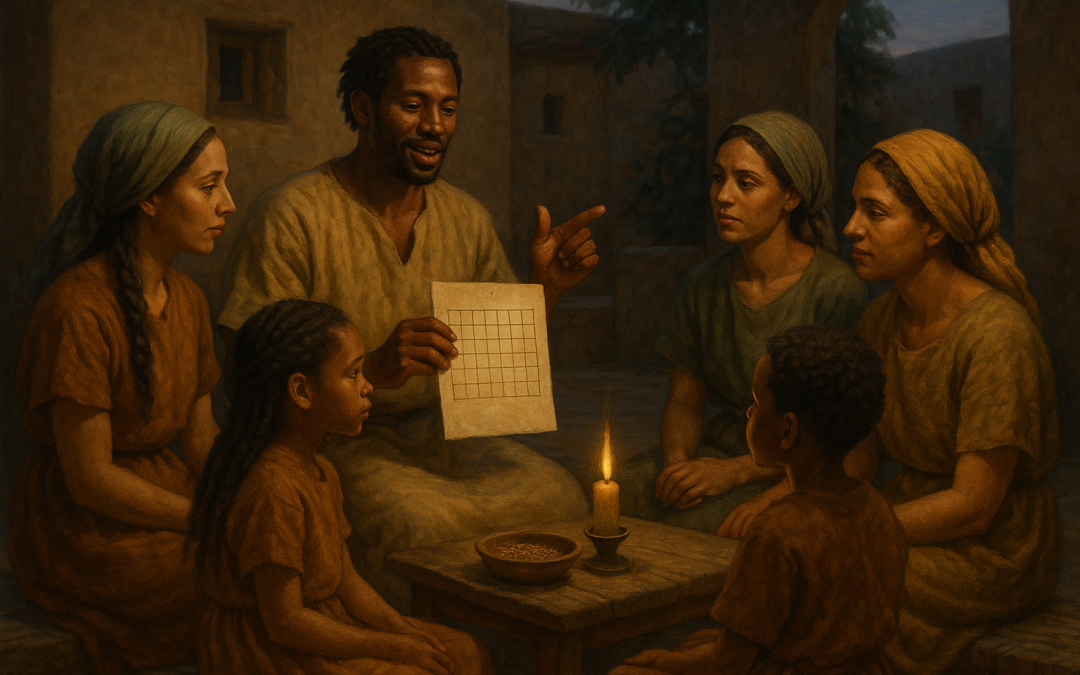
- Set a consistent time: Choose a quiet moment each evening—after supper or before bed—when the family gathers to count together for about 5 minutes.
- Light one candle: A single flame can mark the season. The candle is a symbol, not an object of devotion. Extinguish the candle safely when finished.
- Count aloud: The parent (an adult Israelite man when mixed-gender groups are present, in keeping with our teaching practice) announces the day: “Today is the Xth day, which is Y weeks and Z days of the Omer.” Keep the language simple for children.
- Read a short Scripture passage: Read a short verse or paraphrase from Exodus, Leviticus, or Deuteronomy that points to redemption and covenant responsibility.
- Short family prayer and reflection: Allow one sentence of confession and one sentence of gratitude or expectation from each person, age-appropriate.
- Mark a family chart: A paper chart or string with 49 marks (seven weeks of seven days) helps children visualize progress toward Shavuot.
Short Daily Liturgy Parents Can Use with Children
Leader: “Today is the [number] day of the Omer.”
Response: “We remember Yahuah’s deliverance at Pesach and ask El Elohiym to make us faithful in His Torah.”
Leader (short prayer): “Yahuah, make our hearts ready to receive Your Instruction. Forgive what separates us from You. Thank You for freedom in Yahshua/Jesus. Amen.”
Keep language simple so children can participate and understand that counting is both remembrance and a spiritual training toward obedience.
Teaching Points to Share with Children
- Explain that Pesach (Passover) rescued Israel from slavery, but freedom means choosing to live under Yahuah’s covenant.
- Describe the omer as a reminder that agricultural life and covenant life are linked: Yahuah provides bread and gives instruction for holy living.
- Use Ruth (Rut) as a family story on Shavuot to teach loyalty, faith, and the voluntary acceptance of Torah by a foreigner who chose Israel’s God and people.
Shabbat and Festival Overlaps
When the weekly Shabbat (Sabbath) occurs during Sefirat HaOmer, continue the counting as usual; the count is independent of the day of rest. If a Yom Tov (festival day) coincides, observe the festival’s commanded worship and still count the omer quietly at the appointed time. The practice is not a substitute for Torah-appointed festival worship; rather it complements our preparation and expectation for Shavuot.
Pastoral Cautions: Keep the Practice Rooted in Scripture
- Avoid turning the count into a rigid legalism or into speculative numerology. Let Scripture lead the meaning: remembrance, repentance, and reception of Torah.
- Distinguish Torah commands from later rabbinic or mystical layers. Families may adopt helpful customs but should not replace scriptural clarity with invented ritual obligations.
- Do not present generated devotionals as Scripture or as new revelation. Teach children that Scripture (the Yahudiym Sefer) is the authority, and personal prayers are responses to Yahuah’s revealed words.
- When mentioning Yahshua/Jesus (Yahshua/Jesus), do so reverently and in a way that connects redemption to covenantal life, while respecting the Torah-centered teaching of the household.
Practical Examples and a Weekly Rhythm
Week 1: Focus on remembering (read a short Exodus passage; discuss what freedom means).
Week 2: Focus on gratitude and obedience (read a Leviticus principle; practice a small act of kindness).
Week 3: Focus on repentance (short family confession and corrective plan).
Week 4: Focus on Torah study (read Deuteronomy summaries and discuss one family rule under Torah).
Week 5–7: Deepen expectation for Shavuot; read Ruth on the final night and celebrate by studying a portion of Torah together.
Conclusion: From Freedom to Faithful Life
Sefirat HaOmer is a gift: forty-nine days to form hearts that match the freedom Yahuah gave at Pesach. As families, we can keep the counting simple, Torah-centered, and spiritually meaningful—linking redemption to covenant responsibility and preparing to receive Torah with joy. Let the daily count be less about ritual novelty and more about training in obedience, repentance, and expectant worship before El Elohiym and in the hope of Yahshua/Jesus.