
Introduction: Covenant Meals as Zikaron (Remembrance)
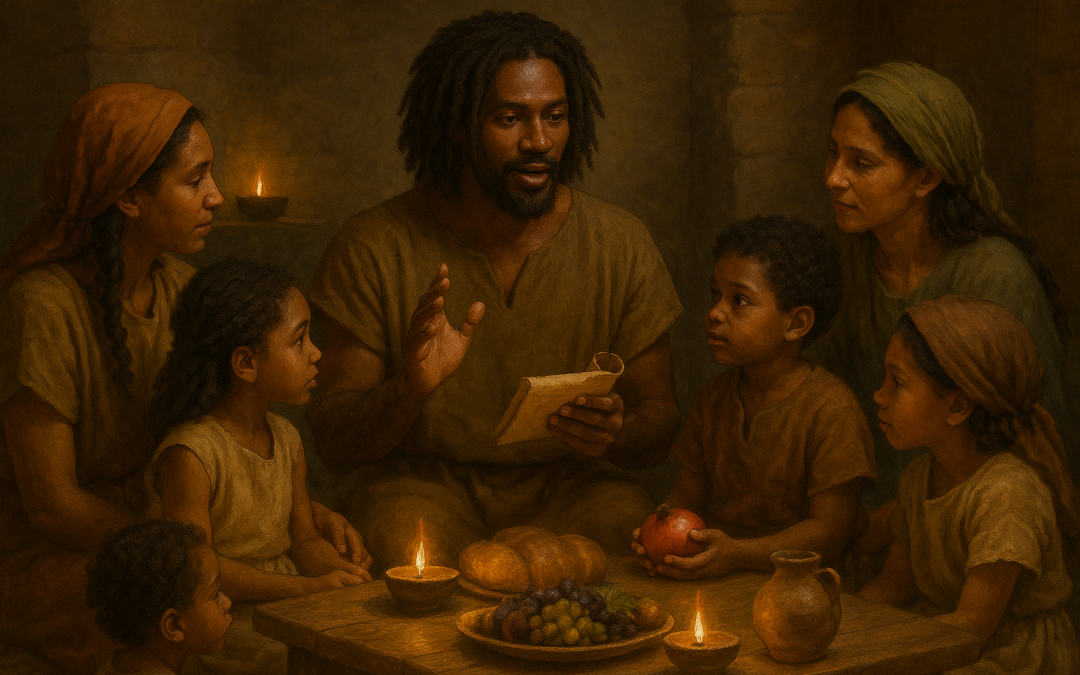
The Torah (Law or Instruction) calls Israel to make the things of the covenant living in the household. The Yahudiym Sefer (Book) of Law instructs parents to place the Word of El Elohiym at the center of home life so that the next generation will remember, obey, and walk in blessing (see Deuteronomy 6:6-9). Meals—everyday bread and the Shabbat (Sabbath) table—are natural, recurring moments to enact zikaron (remembrance) and to teach Torah in simple, faithful ways.
Scripture Grounding for Household Remembrance
Yahudiym Sefer of Law passages supply the basis for covenant meals. Deuteronomy 6:6-9 urges parents to let the words of the covenant be upon the heart, to teach them diligently, and to bind them as a sign on the hand and between the eyes and write them on the doorposts. Exodus 12:24-27 places meal-time memory at the heart of the Passover (Pesach) remembrance: the household meal remembers the day of deliverance. Deuteronomy 8:10 ties a blessing of giving thanks to meals after enjoying the produce of the land. Leviticus 23:3 locates Shabbat (Sabbath) as a holy convocation and day of rest—meals on that day are already sanctified moments for Torah teaching. These passages together show that ordinary eating and feasting are opportunities for covenant instruction, gratitude, repentance, and obedience to El Elohiym.
Principles for Covenant Meals
- Intention: Enter the meal with the purpose of remembering Yahuah (Yah) and teaching His ways.
- Repetition: Daily rhythms and weekly Shabbat patterns create reliable windows for children to learn.
- Simple ritual: Small, consistent actions (a blessing, a question, a short reading) form memory and reflection.
- Age-appropriate teaching: Use stories and questions for little ones; deeper discussion and Torah reading for older children and adults.
Simple Table Rituals for Everyday Meals
Everyday meals need not be elaborate to be sacred. Consider a short, repeatable structure:
- Gathering posture: Light a candle or clap softly to call the household to attention; name the purpose (“We remember Yahuah’s provision”).
- Opening blessing (brief): Invite one sentence of thanks: “We thank Yahuah for this food,” or a traditional blessing such as “Barukh Atah Yahuah, giver of bread” (use language fitting your household conscience and tradition).
- One-sentence Torah: Read or paraphrase a verse relevant to the day—short excerpts from the Yahudiym Sefer of Law (for example, Deuteronomy 8:10 paraphrase: remember to give thanks after eating and being satisfied).
- Conversation prompt: Ask a short question for each person to answer in one sentence (samples below).
- Closing remembrance: End with a short declaration: “We remember the covenant; we walk in obedience.”
Conversation prompts for children
- “What is one thing you are thankful to Yahuah for today?”
- “What does God want us to do with what we have?” (Give one example.)
- “Tell one short thing you learned this week from the Torah (Law or Instruction).”
- “How can we help someone this week?”
Shabbat (Sabbath) and Feast Meal Practices
Shabbat (Sabbath) and Torah Feasts already carry holiness (Leviticus 23:3). Use their extended time together to deepen zikaron and teaching:
- Prepare a place of honor: Set the table as a visible sign of separation from ordinary days. Invite each person to name a blessing received during the week before the meal.
- Short Torah reading: Read a paragraph from the Yahudiym Sefer (Book) of Law—this can be a single law, promise, or story—followed by a two- or three-sentence reflection linking it to daily life.
- Question circle: Allow each person to ask or answer a Torah question about the reading or about kindness, justice, or obedience.
- Blessing and covenant reminder: Recall Exodus 12:24-27 at Passover meals; at every Shabbat declare how the day points us back to the covenant and our dependence on El Elohiym.
Seasonal Adaptations: Passover (Pesach) and Firstfruits (Bikkurim)
Feasts of the Torah offer clear models for household zikaron.
Passover (Pesach)
Use Exodus 12:24-27: make the meal a story-driven service. Keep the structure focused on remembrance of deliverance.
- Before the meal, briefly tell the story of the Exodus using words children can follow; use a central object (e.g., a cup of wine or grape juice, or a plate with symbolic items) to anchor memory.
- Give children conversational roles—one child asks a “why” question, another answers a sentence; rotate roles to teach participation and memorization.
- End with a gratitude statement and a simple charge to pass this story to the next generation (explicit zikaron duty).
Firstfruits (Bikkurim)
Bikkurim celebrates the first fruits and the provision of the land. Make meals around new produce moments of thanksgiving and teaching about dependence and stewardship (see Deuteronomy 8:10).
- Bring the first piece of fruit to the table and read a short line connecting provision to covenant responsibility (e.g., share a portion with someone in need).
- Discuss stewardship: who benefits from our gratitude being expressed as giving?
Practical Blessings, Short and Simple
Blessings at the table should be concise, reverent, and repeatable. Examples for a household to adapt:
- Opening everyday blessing: “We thank Yahuah for this food and for life. May we use it to walk in His ways.”
- Shabbat opening: “Blessed are You, Yahuah, who gives rest and sets us apart for covenant. Help us remember and obey.”
- Firstfruits: “We offer our firstfruits to Yahuah in gratitude and pledge to share His bounty.”
Teaching with Love, Correction, and Repentance
Meals are also appropriate times for correction and repentance—gentle, timely instruction when character issues appear. Keep correction brief and restorative, calling people back to covenant duty and mercy. Teach children that obedience and repentance are part of walking with El Elohiym.
Closing Charge
Make covenant remembrance ordinary and joyous. The Yahudiym Sefer of Law pictures a household saturated with Torah—spoken, sung, and re-told at the table and doorpost (Deuteronomy 6:6-9). By shaping meals into moments of zikaron, blessing, and instruction, families pass the covenant to the next generation. Let every bread and cup be a prompt to remember Yahuah (Yah), to teach Torah (Law or Instruction), and to walk in obedience—so that the household flourishes under the goodness of El Elohiym.
Suggested short practice this week: At one evening meal, read aloud Deuteronomy 6:6-9 from a Yahudiym Sefer of Law translation, then let each person name one thing they will do this week to obey. Keep it prayerful, simple, and repeated.