
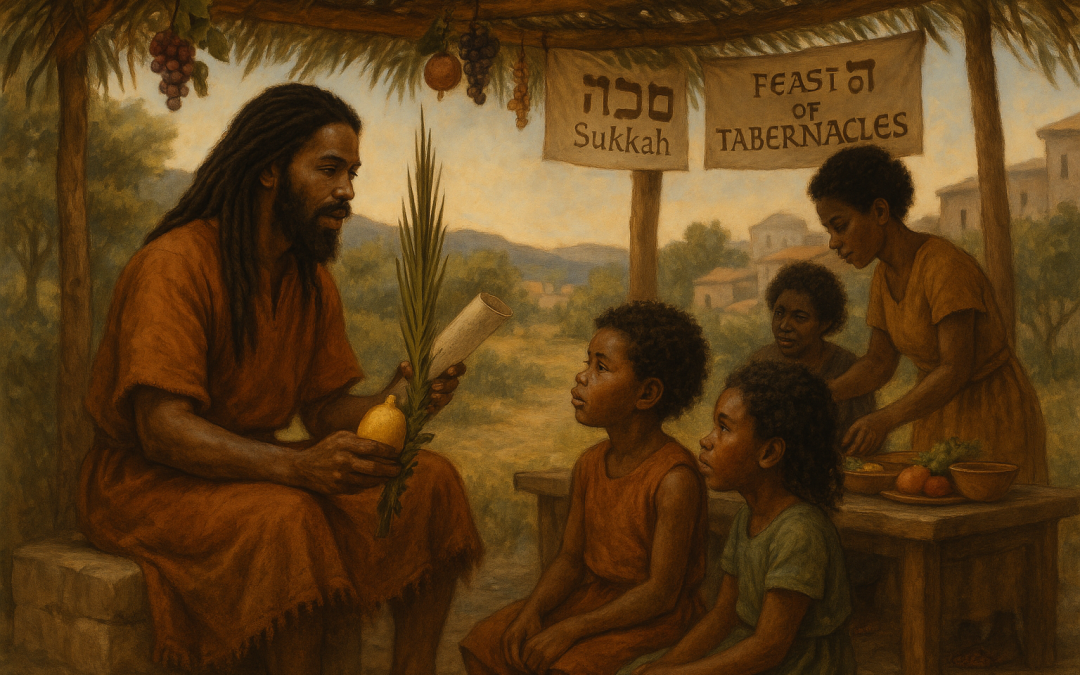
Introduction: Covenant Dwelling and Joy
Sukkot (Feast of Tabernacles) is first introduced in the Yahudiym Sefer (Book) of Law, where El Elohiym (the Creator above all mighty ones) commands Israel to dwell in booths. These days call us to remember dependence upon Yahuah (Yah), celebrate harvest provision, and rejoice as a covenant family. The instructions in Leviticus 23:34-43 and the reminder to take the four species in Leviticus 23:40 form the Torah foundation for household observance. Deuteronomy 16:13-15 and the revival scene in Nehemiah 8:14-18 emphasize family, feasting, and teaching the next generation. In this practical guide we lay out Torah-grounded steps for building a succah (booth), sanctifying the lulav (palm/branch) and etrog (citron), instructing children, and linking our home worship to the prophetic hope in Zechariah 14:16-19.
1. Biblical Purpose and Scripture Foundation
Leviticus 23:34-43 establishes the festival and its purpose: a week-long appointed time to live in booths as a remembrance. Leviticus 23:40 highlights the four-species practice (palm/lulav, myrtle, willow, and citron/etrog) as a Torah sign of thanksgiving. Deuteronomy 16:13-15 places this festival in a family and national rejoicing context. Nehemiah 8:14-18 demonstrates how restoring these observances brings revival and teaching across generations. Finally, Zechariah 14:16-19 looks forward to nations coming to celebrate this feast in the days to come, connecting our present obedience to future prophetic hope. In all teaching, keep Torah (Law or Instruction) central: the festival is commanded, covenantal, and formative for family life.
2. Practical Steps to Build a Succah (Booth) for Your Household
Build the succah as a sheltered space where family life and Torah teaching can be lived during the appointed days. The following steps are practical and safety-minded, intended for household use:
- Choose the place. Outdoors is preferred so you can see the sky through the roof covering. Pick a flat, safe area with good access, within sight of the house where family meals and teaching will occur.
- Size and structure. Make the succah large enough to accommodate your family for at least one meal and to read Scripture aloud. Use three solid walls or two walls and a partition as a shelter; ensure the structure is stable and secure from wind and rain.
- Roof covering (skhakh). Use natural materials—branches, palm fronds, or other cut vegetation—that create more shade than sun but still allow stars or daytime sky to be visible through gaps. Avoid synthetic tarps for the roof where possible; if used, ensure safety first.
- Decor and harvest symbols. Adorn the succah with fruits, harvest produce, and Torah reminders: pictures or hand-drawn cards of wilderness booths, Scripture references, and family blessings. Keep candles and flames safe—consider battery lights for children.
- Sanctify the space. Before first use, gather as a family, declare the succah set apart for Torah observance, offer a short blessing of thanksgiving to Yahuah (Yah) and invite Yahshua/Jesus into the table fellowship as part of family worship. The Torah prescribes dwelling and rejoicing; your household declaration connects practice with purpose.
3. Observing the Lulav (Palm/Branch) and Etrog (Citron)
Leviticus 23:40 prescribes taking the species as a sign. The traditional elements are the lulav (palm/branch) with hadas (myrtle) and aravah (willow) bound together, and the etrog (citron). Below are clear, family-friendly steps to observe this commandment with reverence:
- Prepare the four species. Obtain a straight palm branch (lulav), three myrtle sprigs (hadas), two willow branches (aravah), and one etrog (citron). Bind the lulav, hadas, and aravah together so they may be held as one in the right hand (or left if needed).
- State intent. Before performing the ritual, explain briefly to children that this is a Torah command and a symbol of unity, harvest, and dependence on El Elohiym.
- Blessing and holding. Recite a blessing of thanksgiving to Yahuah for commanding this mitzvah (commandment). For households that follow liturgical phrasing, this blessing thanks Yahuah for sanctifying us and commanding us to take the four species. (This guide avoids placing a liturgical formula here; families may use the traditional blessing they follow.)
- Shake in six directions. Holding the lulav bundle in one hand and the etrog in the other, present them together and then wave or shake gently toward the four cardinal directions and upward and downward to declare Yahuah’s sovereignty over all creation. Teach children that this is a physical prayer of thanksgiving and recognition of God’s rule.
- Daily practice. Perform this after morning prayer or at the festive meals during the seven days, as your family’s schedule permits.
4. Teaching Covenant Joy to Children
Children learn by doing. Use the succah as a living classroom:
- Tell the story. Read and summarize Torah passages (Leviticus 23:34-43; Deuteronomy 16:13-15) in age-appropriate language: why Israel dwelt in booths, how God provided, and why rejoicing is commanded.
- Hands-on crafts. Build small model booths, press fruit for juice, decorate the succah with hand-drawn Scripture cards, and let children help bind a practice lulav set (with supervision).
- Feasting and hospitality. Make at least one family meal in the succah and invite neighbors or those in need—teach the Torah value of welcoming the stranger and rejoicing together.
- Ritual storytelling. Use Nehemiah 8:14-18 as a model: read aloud, explain, sing, and allow children to speak what they are thankful for. This instills memory and covenant identity.
5. Household Obedience and Prophetic Hope
Sukkot is not only remembrance; it is prophetic. Zechariah 14:16-19 speaks of nations coming to worship during the Feast—our household obedience participates in that future hope. When families keep Torah in humility and repentance, they prepare hearts for restoration. Teach children that our seasonal obedience is a sign that we long for Yahuah’s full reign and for the day when all nations acknowledge El Elohiym.
Conclusion: Simple, Sacred, and Shared
Building a succah, taking the lulav and etrog, and teaching covenant joy are acts of obedience rooted in the Yahudiym Sefer of Law. They are practical expressions of dependence on Yahuah, thanksgiving for provision, and instruction for future generations. Do these things with reverence, safety, and clarity: declare the succah set apart, perform the four-species practice with intention, feast and invite, and teach children the meaning found in Torah and in the prophets. May your household be blessed as you dwell in the succah, celebrate in truth, and await the day when all nations come to honor El Elohiym.
Scripture references used: Leviticus 23:34-43; Leviticus 23:40; Deuteronomy 16:13-15; Nehemiah 8:14-18; Zechariah 14:16-19.