
Introduction: Thresholds, Covenant, and the Home
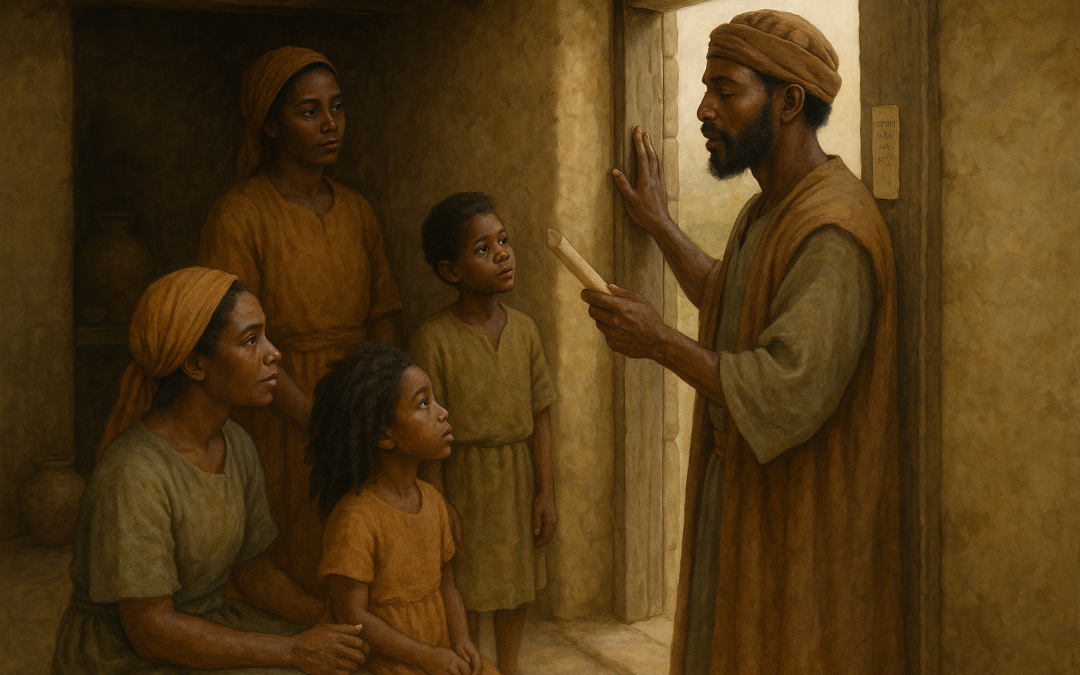
The Yahudiym Sefer (Book) of Law places the family and the home at the heart of covenant life. The commands to write Yahuah’s (Yah) words on the doorposts and to teach them diligently to children are not mere decoration; they are a way of shaping a household into a living testimony to El Elohiym (the Creator above all mighty ones). This teaching traces the Torah basis for the mezuzah (doorpost) and the Shema (Hear, O Israel) instructions in Deuteronomy 6:4–9 and 11:13–21, and relates the Pessach (Passover) doorframe image of Exodus 12:7 to household consecration. We will close with practical, Torah-faithful steps for families today, while warning against extra-biblical innovations.
Scripture and Textual Foundation
Deuteronomy places the duty of covenant instruction in the family. In Deuteronomy 6:4–9 Moses gives the Shema (Hear, O Israel): the proclamation of Yahuah’s unity and the charge to love Yahuah, to keep His commands, to teach them to children, to speak of them at home and on the road, and to bind them as signs on hand and between eyes and to write them on the doorposts and gates. Deuteronomy 11:13–21 repeats and expands the same pattern: listen to Yahuah’s commandments, set them as signs upon your heart and as frontlets upon your eyes, and write them on the doorposts of your house and on your gates.
Shema (Hear, O Israel) — a summary teaching in Deuteronomy that calls Israel to proclaim the unity of Yahuah and to make His words central and visible in family life (Deut. 6:4–9; 11:13–21).
Exodus 12:7 provides a concrete, earlier image: on Pessach (Passover) the blood of the lamb was put on the doorposts and lintel of the houses where Israel ate the Passover meal. That mark made the household distinct and under Yahuah’s preserving care for that night. The doorframe here serves as a boundary marker: inside is consecrated to Yahuah; outside is not. The Passover image of a marked doorframe informs the later instruction to place Yahuah’s words upon the doorposts—both are signs of belonging and obedience.
Why the Threshold Mattered in Covenant Life
The threshold—doorposts and lintel—is the visible line where private family life meets the public world. To place Yahuah’s words there is to declare that this household is governed by Torah (Law or Instruction). Two truths stand out:
- Identity and Protection: In Exodus the marked doorframe brought Yah’s protection during Pessach. In Deuteronomy, the writing of Torah on the doorpost marks the household as Yah’s and calls the family to live under His rule.
- Teaching and Transmission: The doorpost is also a mnemonic. Seeing the words as one enters and leaves the home reminds parents and children that the home’s rhythms are shaped by the covenant. Torah instruction is not confined to the synagogue or the classroom but is woven into everyday life.
Parents Commanded to Instruct Children
Moses places the responsibility of transmitting covenant faith squarely on parents. Deuteronomy instructs fathers and mothers to teach their children when sitting at home, walking along the way, lying down, and rising up. This is both routine and relentless: Torah instruction accompanies all parts of family life. The words on the doorpost are a visual aid to this persistent teaching.
Instruction is more than information. It is formation—training the heart to love and obey Yahuah, to see life through the lens of covenant, and to recognize Yahshua (Jesus) only where Torah and the Prophets testify (for the Yahudiym Ministries reader, this is a matter of faithful continuity with the Torah). Families are called to an active, daily discipleship of children in covenant ways.
Practical, Torah-Faithful Steps for Sanctifying the Threshold Today
Below are sober, text-grounded practices families can adopt, rooted in the Deuteronomy and Exodus passages while avoiding later extra-biblical innovations or superstition.
1. Scripture Reading and the Shema Rhythm
- Establish a daily pattern: read the Shema portion (Deut. 6:4–9) together morning and evening as a family devotion. The Shema is brief and central and fulfills the Torah command to speak of these words continually.
- Include explanation: parents should explain the meaning—Yahuah’s unity, loving obedience, and the call to teach children—so that reading becomes formation, not ritual recital.
2. Posted Words at the Threshold
- Comply with the Torah’s intent: put Yahuah’s words where household members will see them. This can be a carefully written and reverent display of Deut. 6:4–9 at the doorpost or in a visible family place. For those who choose a written scroll, seek a Torah-faithful scribe (sofer) to prepare the text on proper parchment, and understand this as a reminder, not a talisman.
- Avoid superstition: do not treat the mezuzah as a charm that forces protection. The Torah gives a visible reminder of covenant; it does not reduce Yahuah to a magical object.
3. Household Dedication at Pessach (Passover)
- Use Exodus 12 as a teaching moment. Read Exodus 12:7 together and explain how the Passover doorframe was a sign of separation—inside was set apart and obedient to Yahuah for that night. Apply the lesson spiritually: prepare the home through repentance, confession, and removal of practices or items contrary to covenant obedience.
- Hold a family Pessach telling: let parents lead children through the narrative, emphasizing deliverance, obedience, and the requirement to teach the next generation.
4. Teaching Routines and Family Formation
- Embed Torah instruction in daily life: conversation at meals, questions on journeys, bedtime catechesis. Moses’ command makes Torah transmission continuous.
- Model obedience: parents’ lives must embody what they teach. The doorpost words lose power if the household does not live by them.
Guarding Against Extra-Biblical Innovations
The Torah commands writing and teaching; later communal practice developed many forms and customs. Families must distinguish between Torah instruction and later customs that have become superstitious or commercialized. Avoid:
- Treating the mezuzah as an automatic talisman rather than a covenant sign and reminder.
- Rituals or objects not grounded in Torah that promise protection or blessing in place of repentance and obedience.
Instead, return to the Torah pattern: teach, read, repent, obey, and mark the home visibly and reverently as a declaration of Yahuah’s rule.
Conclusion
Deuteronomy’s instruction to write Yahuah’s words on the doorposts and Exodus’s Passover doorframe image together teach that the household is meant to be a covenant space—marked, taught, and lived. Parents bear the responsibility to form children in the way of Torah. Practical steps such as daily Shema readings, visible posted words at thresholds, Pessach household consecration, and disciplined teaching routines help families make their homes places where El Elohiym is known and obeyed. Let all household sanctification begin with repentance, the teaching of Torah, and lives shaped by devotion to Yahuah and the ways He has given in the Yahudiym Sefer of Law.
Scripture references used: Deuteronomy 6:4–9; Deuteronomy 11:13–21; Exodus 12:7 (read in your preferred Yahudiym Sefer edition). This post distinguishes Scripture, explanation, context, and application and seeks to remain faithful to the Torah text.