
Introduction: Covenant Duty and the Home
Yom Kippur (Day of Atonement) is rooted in the Yahudiym Sefer (Book) of Law and in the instructions given through Mosheh (Moses). Leviticus (Vayikra) 16 and the appointed-day instructions in Leviticus 23:26–32 and Numbers (Bemidbar) 29:7 shape how the covenant people approach repentance and restoration. This teaching offers households a Torah-centered, practical way to honor Yom Kippur at home: instructing children in humility, structuring family confession modeled on Levitical language, practicing reconciliation, using simple symbolic signs of repentance, and preparing spiritually before and after the fast. We do this while making clear that priestly sacrificial rites are performed only by the kohen (priest) in the Mishkan/Temple and are not replicated by households.
Levitical Foundation and the Household Distinction
Leviticus 16 sets the pattern for the high priest’s service on the day of atonement; it is a sacred, ritual ministry performed by the kohen gadol (high priest) before Yahuah (Yah) for Israel. The appointed-day commands in Leviticus 23:26–32 and the assembly described in Numbers 29:7 emphasize affliction of the soul and holy convocation. These texts ground our practice: we learn the posture and purpose (humility, confession, and reconciliation), but we must not attempt to imitate the priest’s sacrificial actions in the home.
Household devotion must be distinct: the family may observe fasting, confession, prayer, charity, and reconciliation, but not priestly sacrifices or cultic rites reserved for the kohanim. This distinction both honors the Torah and keeps household worship reverent and lawful.
Preparing the Household — Spiritual and Practical Steps
Begin preparation several days before Yom Kippur with teaching and prayer. Emphasize the meaning: turning to Yahuah (Yah) in genuine repentance (teshuvah), as Joel teaches the people to return with fasting and weeping (Joel 2:12–13). Use Psalm 51:1–4 as a model for contrition — the psalm shows humble acknowledgement of sin and need for mercy.
- House cleaning and simplicity. Remove or store entertainment devices, dim unnecessary lights, and arrange a quiet place for the family to meet for prayer and confession.
- White or plain garments. Provide simple white or plain garments for the family to wear as a visible sign of humility and cleansing. Explain that this is symbolic — an outward reminder of the inward call to purity.
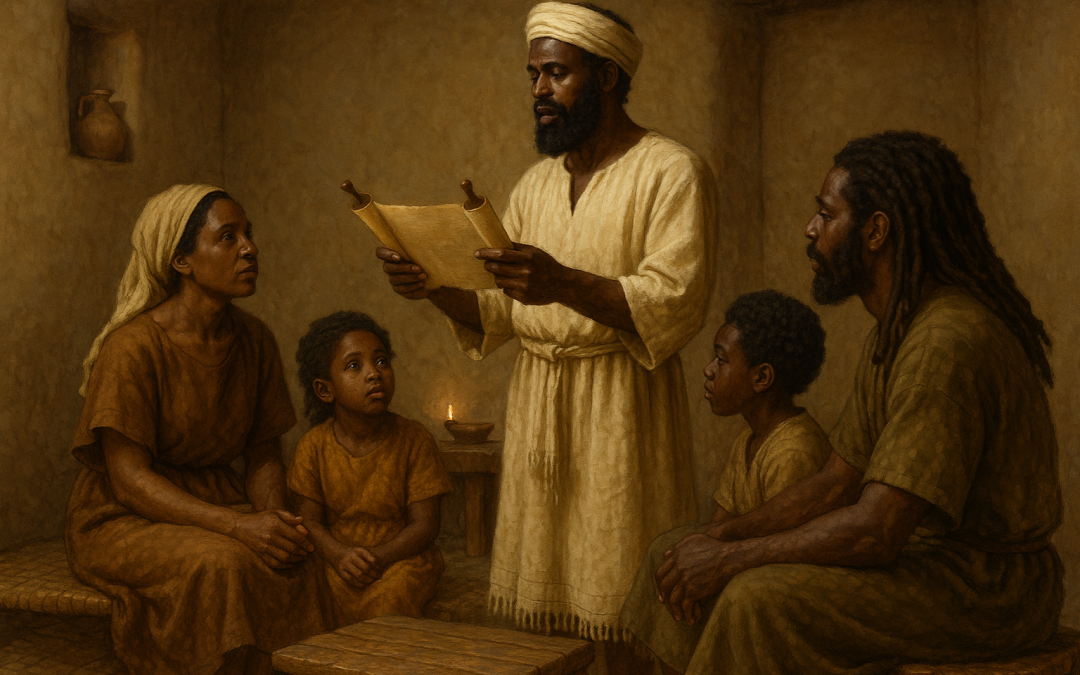
- Study and instruction. Read aloud the relevant passages (paraphrase if necessary for children): Leviticus 16; Leviticus 23:26–32; Numbers 29:7; Joel 2:12–13; Psalm 51:1–4. Teach the difference between priestly duties and household devotion.
- Designate roles. In a mixed-group teaching setting, the adult Israelite man (father, elder, or appointed head) leads the instruction and prayer, in keeping with traditional Torah practice.
Age‑Appropriate Fasting and Humility
The Torah calls the assembly to “afflict the soul” (Leviticus 23:27–32) — understood as humbling through fasting and abstinence. In the household, apply wisdom and care:
- Adults. Those physically able may observe a full fast in the pattern of affliction and holy convocation. Seek Yahuah in prayer, and abstain from food and habitual comfort for the appointed period.
- Adolescents. Older teens may be encouraged to fast in a way that matches their maturity and health — partial fasts, skipping treats, or fasting from certain activities. Give guidance and monitor health.
- Young children and those with health needs. Children and people with medical conditions should not be forced into a full fast. Encourage participation through a simpler discipline: avoiding sweets, choosing quiet study time, giving up devices, or practicing short periods of fasting under supervision.
- Always prioritize safety. Consult medical counsel where necessary and make compassionate accommodations.
Structured Family Confession — Modeled on Levitical Language
While the sacrificial system is priestly, the language of confession and corporate admission of sin can and should be used in the home. The following model is offered as a liturgical frame, clearly stated as a household confession modeled on Levitical themes, not as a replacement for the priestly rites:
Leader: “We come before Yahuah (Yah) in humility. We have sinned; we have trespassed; we have failed in word, deed, and thought. We ask for mercy and forgiveness according to the covenant.”
Family (responsive): “Forgive us, O Yahuah, and turn our hearts to walk in Your Torah (Law). We repent and commit to right our wrongs where we can.”
Leader: “As a household we will seek to make restitution where needed. If I have wronged my brother/sister, I will speak and seek reconciliation; if I have wronged the community, I will act justly.”
After the communal confession, allow silent time for personal, spoken confession to the Leader (head of household) or to Yahuah in private prayer. Encourage children to name simple wrongs and to ask forgiveness directly from those they have harmed.
Guided Reconciliation Practices
- Face-to-face apology. Teach children and adults to seek the one they have wronged, state the wrong plainly, ask forgiveness, and accept the response without bargaining.
- Restitution. Where property or damage is involved, commit publicly as a family to make right what can be made right, following Torah principles of justice and recompense.
- Community repair. If an offense affects the wider community, plan a household act of service or charity (tzedakah) to demonstrate sincere teshuvah (repentance).
- Blessing and release. When forgiveness is granted, have the forgiver pronounce a short blessing of release and encourage a tangible sign of reconciliation (a handshake, hug, or shared blessing) suitable to the family.
Symbolic Household Signs of Repentance
Symbols help children and adults alike enter the posture of repentance. Simple, non‑liturgical signs include:
- Plain white garments to symbolize seeking purity (not priestly vestments).
- Removal of distractions: devices, music, decorative excess.
- Quiet corners for prayer and confession.
- A family scroll or board listing commitments to change — visible and revisited after the fast.
After the Fast — Rebuilding and Ongoing Teshuvah
Yom Kippur’s goal is renewed relationship with Yahuah and one another. After the fast:
- Break the fast gently and with gratitude; teach children the dignity of disciplined celebration.
- Review the family commitments made, set measurable steps, and schedule accountability check‑ins.
- Reinforce study of Torah (Law) and Psalmody (e.g., Psalm 51 as a model of repentance) and encourage continued prayer for renewal by the Ruach Ha’Qodesh (Holy Spirit).
Closing Caution and Encouragement
Let the household observe Yom Kippur with reverence and humility, rooted in Levitical instruction and the prophetic call to return (Joel 2:12–13). Honor the distinction between the priestly atonement rites described in Leviticus 16 and the household’s calling to contrition, confession, and reconciliation. Lead your family with clarity, tenderness, and obedience to the Torah (Law), seeking Yahuah’s mercy and walking forward in covenant faithfulness to El Elohiym, the Creator above all mighty ones.
Recommended Reading and Practice
- Read Leviticus 16 and Leviticus 23:26–32 together as a household (paraphrase for children where helpful).
- Study Psalm 51:1–4 and Joel 2:12–13 for devotional guidance on contrition and returning to Yahuah.
- Plan a family meeting before Yom Kippur to assign roles, explain practices, and ensure health needs are met.