
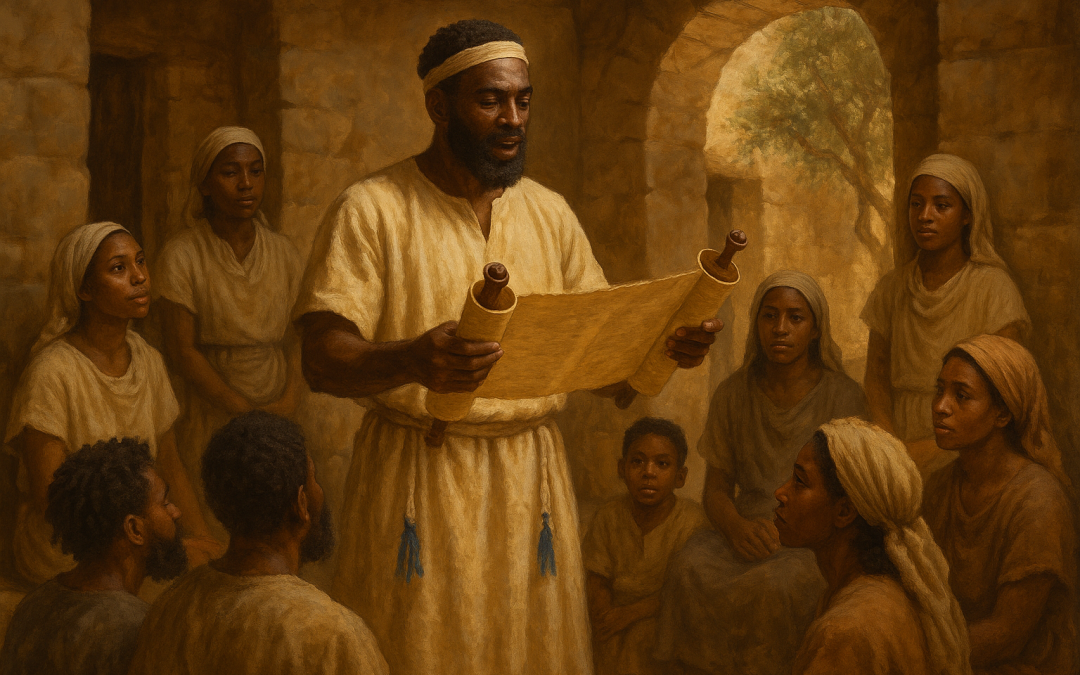
Introduction: Obedience in the Covenant Way
Obedience is not merely moral effort or personal discipline. In the teaching of the Yahudiym Sefer (Book) of Law and the Prophets, obedience is covenant fidelity — the living response of Israel to Yahuah, El Elohiym, who called our fathers and established laws, statutes, and ways for life. This essay seeks to set before the reader a clear, reverent, and practical exposition of obedience in Torah terms, showing its Scriptural foundation, historical meaning, and application for families and communities today.
Scriptural Foundation: Covenant, Command, and Heart
The Torah links obedience directly to covenant life. The Shema, as recorded in Deuteronomy, summons Israel to hear and to love Yahuah with all heart and to keep His commands. Rather than quoting a verse number here, we paraphrase the thrust of that Torah charge: love Yahuah, hold His words in your heart, and walk in His ways. The Prophets and the Writings continually call Israel back to sincere obedience — not mere outward ritual — and the Renewed Writings show Yahshua/Jesus calling disciples to follow the Father’s will in word and deed.
Paraphrase (Torah teaching): Hear, O Israel: love Yahuah your El Elohiym with all your heart, and keep His commands; let His teaching dwell richly among you.
This paraphrase reflects the Torah’s emphasis on inward love and outward keeping. When Scripture speaks of obedience it includes both the inner intention and the outward life that flows from covenant knowledge.
Historical Context: Obedience as Communal Covenant
In the Torah era obedience functioned as collective covenant identity. Israel’s law-covenant distinguished the nation as a holy people set apart to Yahuah. Obedience governed worship, social justice, justice between neighbors, family order, ritual life, and civil practice. It was not a private ethic alone; it formed the pattern of an entire community living before El Elohiym.
When Israel obeyed, blessing and life followed. When Israel turned from obedience, the Prophets linked covenant unfaithfulness to social breakdown, exile, and suffering. Thus obedience is shown to be practical: it preserves relationship with Yahuah and sustains the shalom (peace) and integrity of family and community life.
What True Obedience Looks Like
True obedience in Torah terms has several interlocking features:
- Heart-response: Obedience begins with love and reverence for Yahuah, not mere fear or external conformity.
- Knowledge of the Law: The Torah is to be learned and remembered so that life is shaped by divine instruction.
- Practical Righteousness: Obedience manifests in justice, mercy, and humility in social relationships.
- Repentance and Return: When failure occurs, Torah calls for sincere teshuvah (turning back), confession, and restored fidelity.
- Communal Witness: Obedience is lived corporately so the community bears witness to Yahuah’s ways.
Obedience and Yahshua/Jesus
The life and teaching of Yahshua/Jesus, recorded in the Renewed Writings, uphold the Torah’s call to wholehearted obedience. He modeled submission to the Father’s will and called disciples to follow in humble service. This shows that obedience remains central for those who claim covenant belonging, both under the Torah and in the renewed life of Messiah.
Repentance: The Path Back to Obedience
Torah obedience does not presume perfection. Rather, the Torah and the Prophets provide a path of repentance for restoration. Teshuvah involves recognizing failure, turning from wrong ways, and returning to Yahuah with humility and renewed commitment. The community must provide means for repentance and restoration, that the individual’s return heals both personal standing and the communal fabric.
Practical Applications for Family and Community
How do we embody Torah obedience today? The following applications are rooted in covenant priorities:
- Household Torah Teaching: Parents and elders must teach the Torah to children — not only rules, but the reasons and the love of Yahuah that undergird them.
- Worship and Sabbath Order: Regular, covenantal worship and Sabbath observance shape hearts toward dependency on Yahuah and provide communal rhythm for obedience.
- Justice and Mercy: Obedience shows in fair treatment of neighbors, protection of the vulnerable, honest speech, and righteous business practice.
- Discipline and Repentance: Communities need compassionate discipline that leads to restoration, not shaming; the goal is return to covenant loyalty.
- Leadership by Example: Leaders — elders, priests, teachers — must live obedience transparently. In mixed teaching settings, Torah instruction should be led by mature Israelite men as elders or teachers, with women honored in roles appropriate to Torah order.
Obstacles to Obedience and How to Overcome Them
Common obstacles include cultural conformity, selfish ambition, and a lack of Torah knowledge. Overcoming these requires regular study of the Yahudiym Sefer of Law and the Prophets, congregational accountability, and practical training in righteous living. Repentance and renewed covenant vows should be regular features of community life to re-anchor hearts to Yahuah.
Conclusion: The Reward of Faithful Keeping
Obedience is more than duty; it is covenant response — the living fruit of having heard the voice of Yahuah and chosen to walk in His ways. El Elohiym, the singular Creator above all mighty ones, calls us to faithful keeping so that blessing, shalom, and communal strength are maintained. Yahshua/Jesus reminded disciples that true devotion bears fruit in obedience to the Father. Let us therefore cultivate hearts of love, lives of Torah-shaped practice, and communities that restore sinners through repentance and reclaim covenant life through faithful obedience.
Note: This teaching is offered as Torah-centered instruction and application. It is not presented as a divine oracle but as careful exposition intended to edify the community of Yahudiym Ministries.
Editorial Verification Notes
- Used 'Yahudiym Sefer (Book) of Law' as the preferred designation where reference to Scripture is appropriate, per editorial rules.
- Used the Name 'Yahuah' for the Most High and presented 'Yahshua/Jesus' side-by-side for reader clarity, as required.
- Presented 'El Elohiym' as singular Creator in the text.
- No chapter-and-verse citations were invented; passages are paraphrased and identified by book or teaching when appropriate (e.g., Shema in Deuteronomy).
- Distinguished Scripture paraphrase, explanation, historical context, and practical application as separate sections.
- Included permanent visual standards in image_prompt: adult Israelite man teaching mixed group, dark-skinned African-descended figures, appropriate hairstyles and garments, no European/medieval styling, women not teaching mixed groups.
- This content is presented as Torah-centered teaching and explicitly not claimed as divinely inspired, per accuracy rules.